The wheels were turning – in more ways than just a recent Michelin presentation of tires to fit a restoration Greenwood Military Aviation Museum aircraft.
While museum volunteer Doug Butt and his buddy, Johnny MacDougall, were out on one of their shared car club’s jaunts; Butt ran an idea past MacDougall: did he think he could help the museum find suitable tires for a restoration of a Bristol Bolingbroke MK IV? The museum was stumped.
MacDougall, Canadian engineering manager for Michelin Canada, put in the ask, knowing the company has three aircraft tire-making factories around the world: “this is an 80-year-old plane – do we actually make a tire for this?
“‘Yes, we do, and we have two,’” was the answer MacDougall heard.
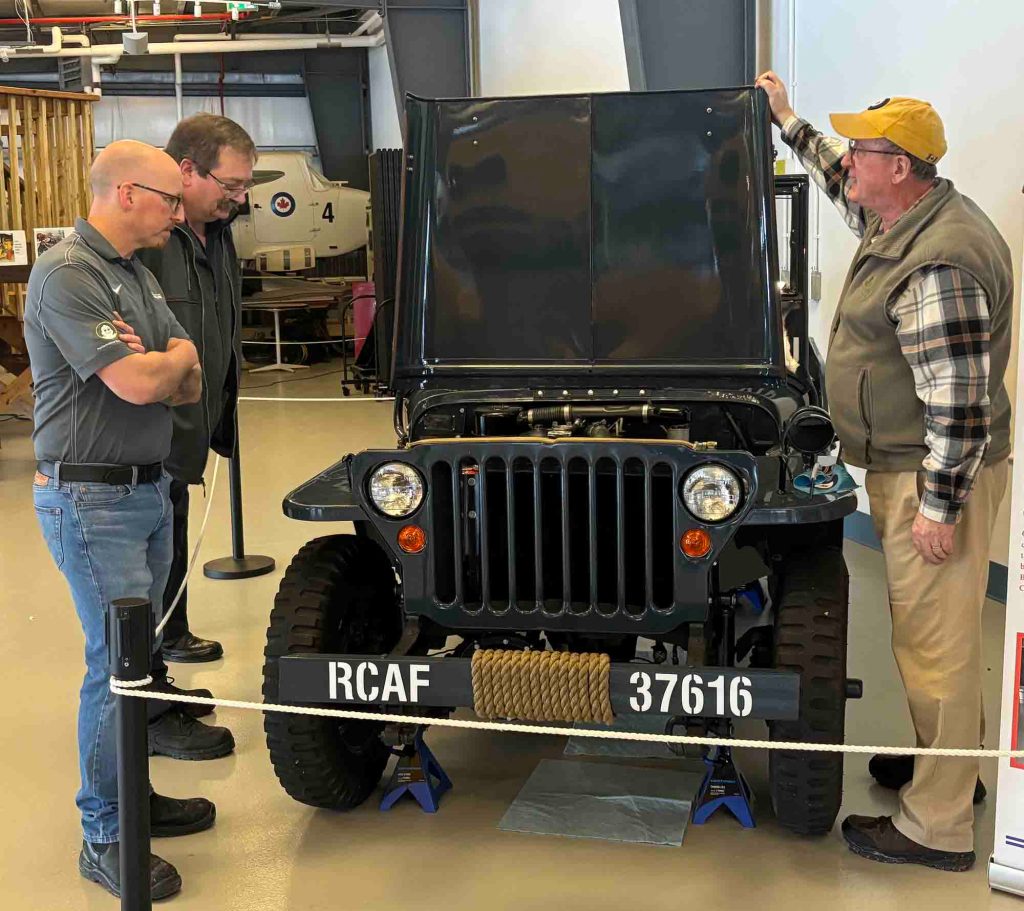
February 20, MacDougall, with Roy Baker, engineering coordinator, and Mike Disley, maintenance planner, both at Michelin’s Waterville plant; brought the two tires to the museum. Set in the restoration workshop, the tires were the starting point of a two-hour visit of shared aviation and engineering interests.
Museum society president Brian Handley introduced the Michelin trio to the museum, starting with its humble beginnings in 1995 to today’s 17,000 square feet, more than 11,000 artefacts, home of an immersive Grade 6 curriculum Flight Education program, with 40-plus volunteers. The museum captures CFB Greenwood’s heritage from its 1942 beginnings as a British Commonwealth Air Training Plan base to today’s operational work.
The Bolingbroke restoration, donated in 2009 by the Reynolds Heritage Preservation Foundation in Alberta, has been underway for over 12 years, with 28 volunteers working at various times on the aircraft.
“This was a trainer here in Greenwood under the BCATP, for bombing, navigation and gunnery; and it was flown overseas during the Second World War by 404 Squadron,” Handley said. The aircraft will, eventually, be kitted out in its wartime yellow and black “bumble bee” training pattern, as it would have flown over Greenwood.
From the public displays to the restoration workshop, the visitors were impressed – and inspired – by what they saw. Volunteers were 3D printing replication parts, fabricating metal, building wooden jigs, following decades-old aircraft specs faithfully – and more, continuing to develop displays that will highlight Greenwood’s aviation heritage for the public.
“When we first came to Nova Scotia with Michelin, we hired a bunch of military people – they had the skill sets we wanted,” MacDougall said. “Many had worked on the Aurora, and we took advantage of that training.
“This museum – for a volunteer organization – it’s truly amazing. We need to try and get some of our engineers and technical people down here, next to your team on the museum’s floor. We’d love to bring some of our young engineers to see what’s happening here.”