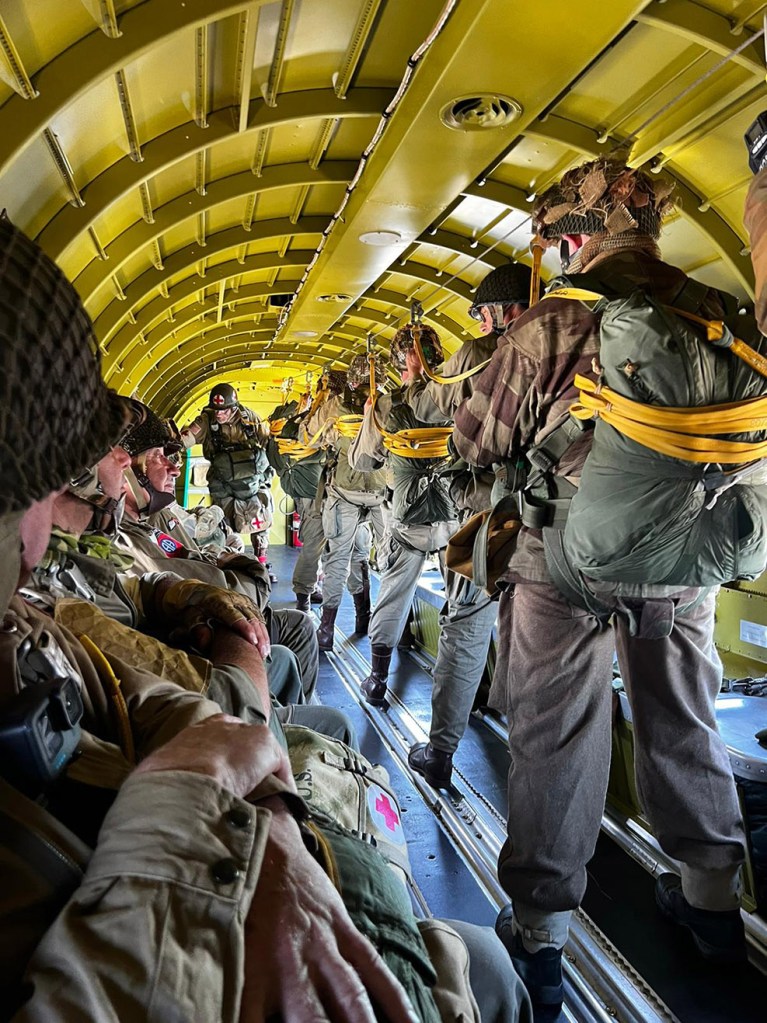
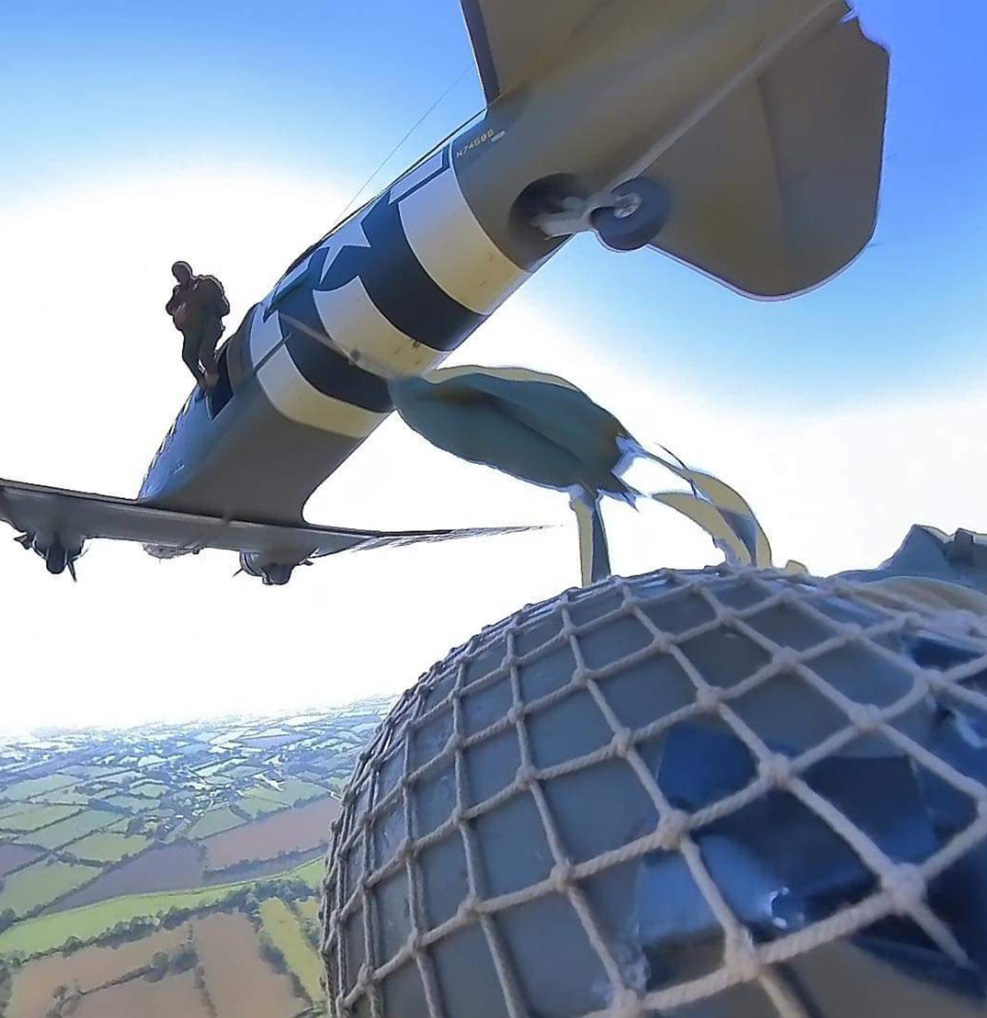
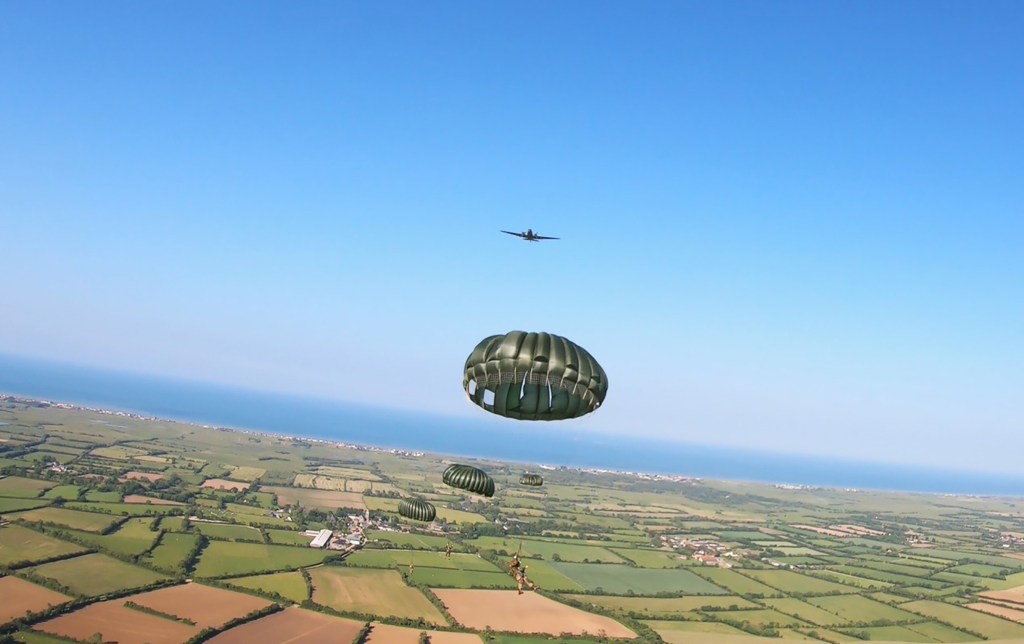
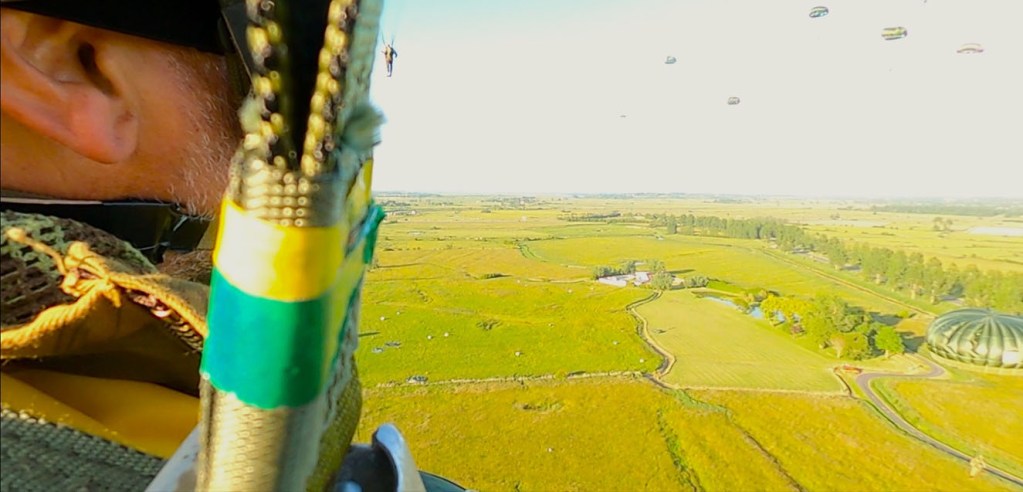
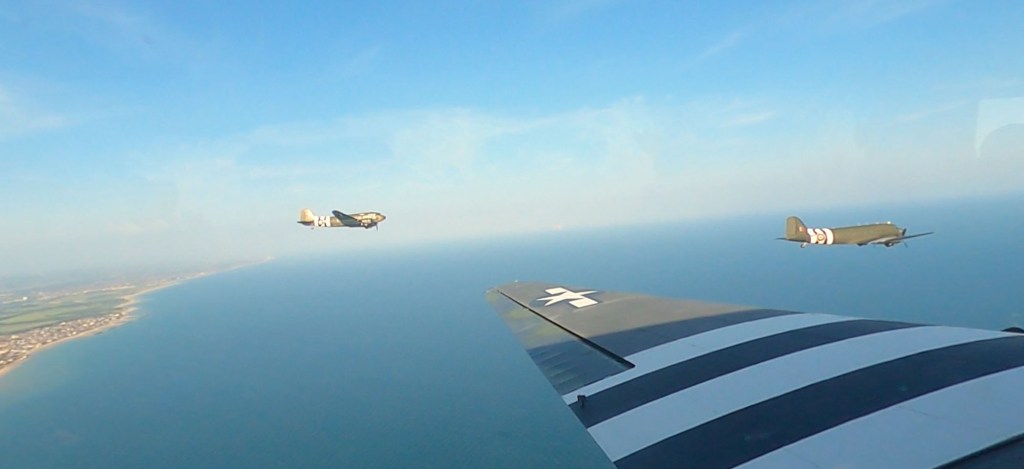
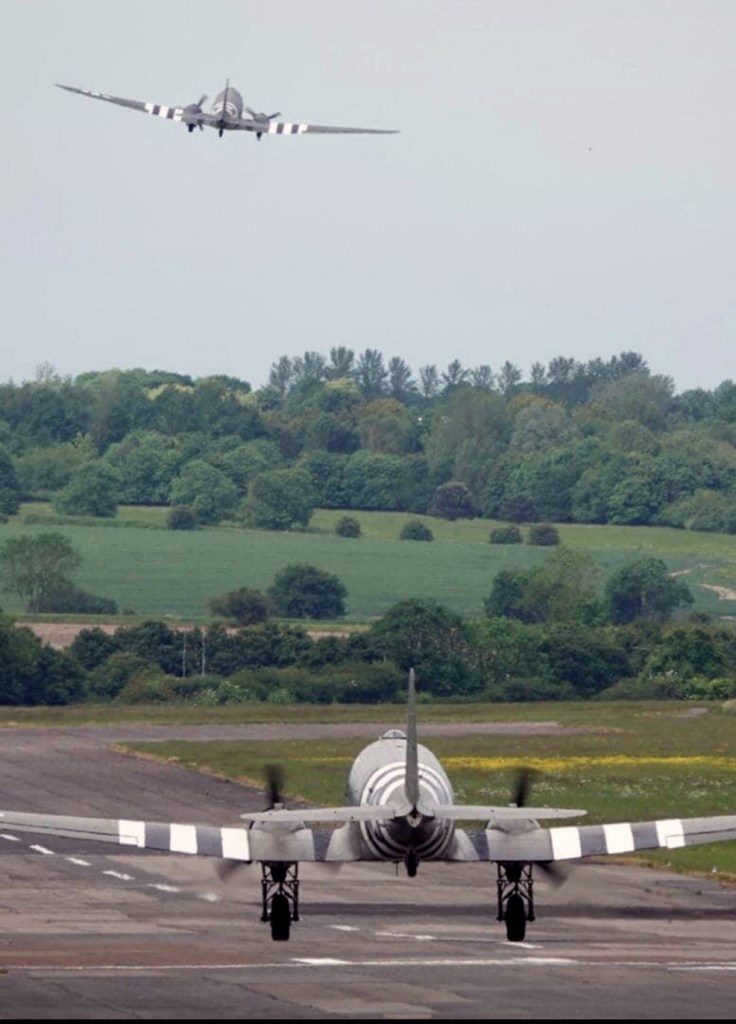
On the morning of June 2, the Douglas C-47 Skytrain “Placid Lassie” left England in a three-ship formation, set to drop the first commemorative parachuting display of D-Day 80th anniversary commemorations in Normandy.
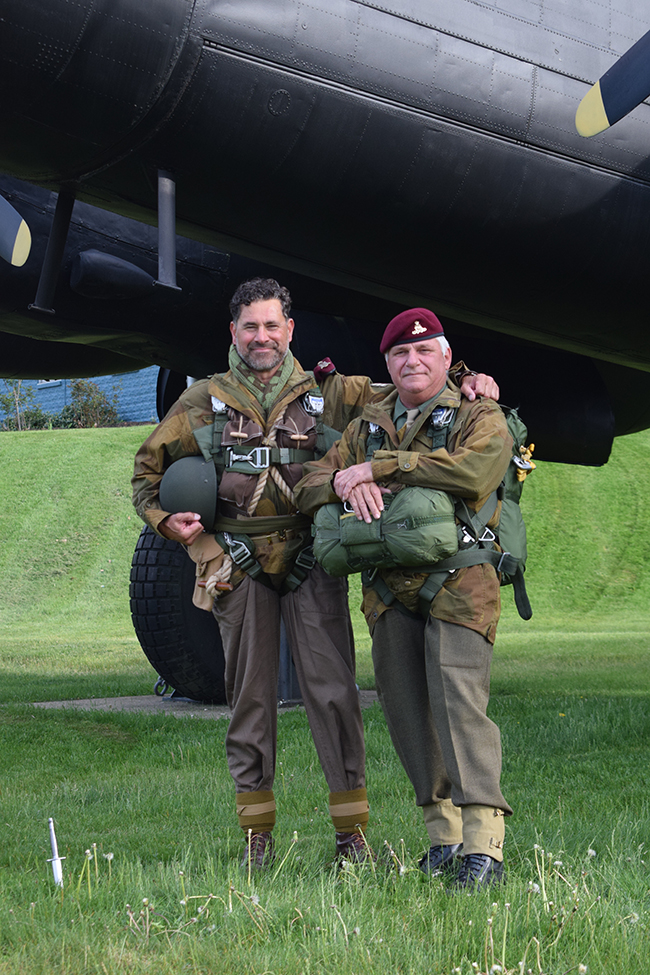
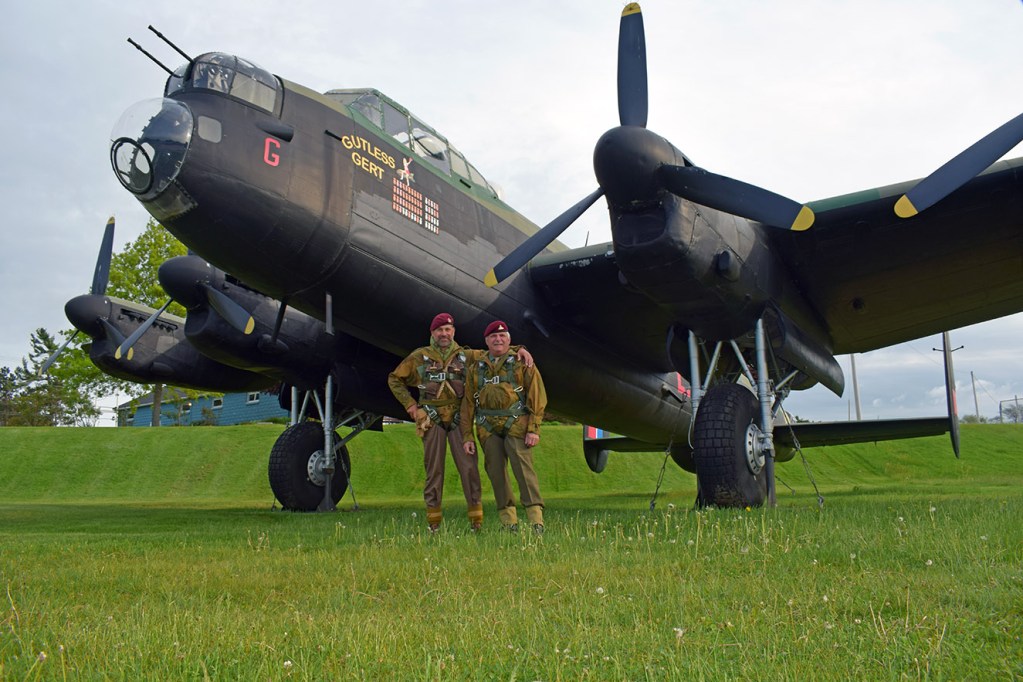
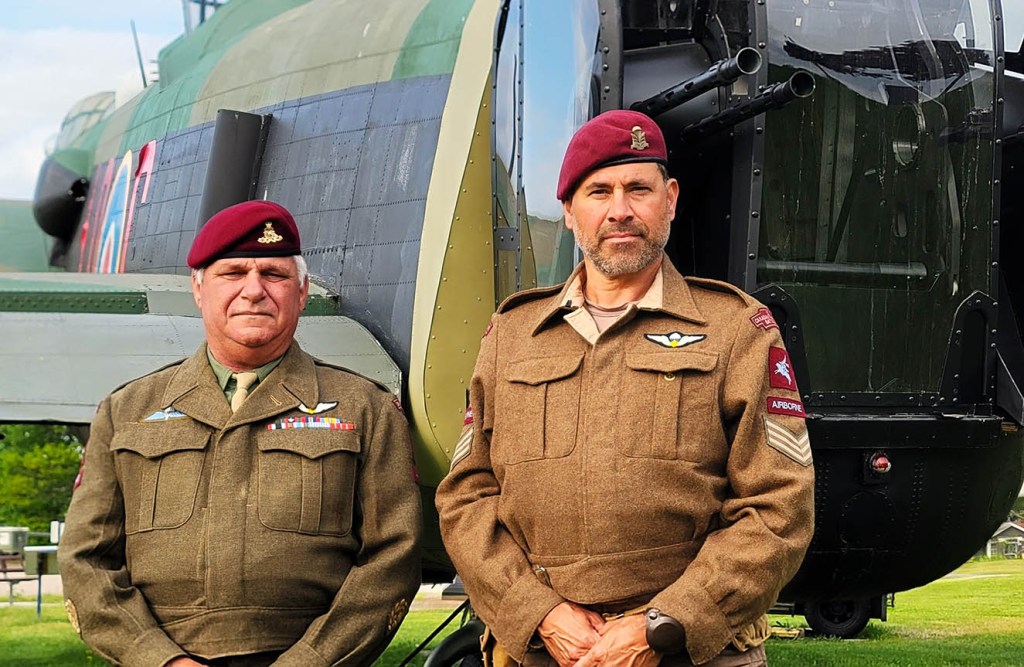
Onboard the 1943 original were 14 Wing Greenwood’s Sergeant Jim Beaulieu, Master Warrant Officer (retired) John Saunders, Greenwood; and Sergeant (retired) Gabriel Ferland, Quebec – the only three Canadian jumpers.
“It actually felt like being back in the Airborne – except not being 20-something,” laughed Saunders, followed by Beaulieu, who added, “being a couple weeks away from 60!”
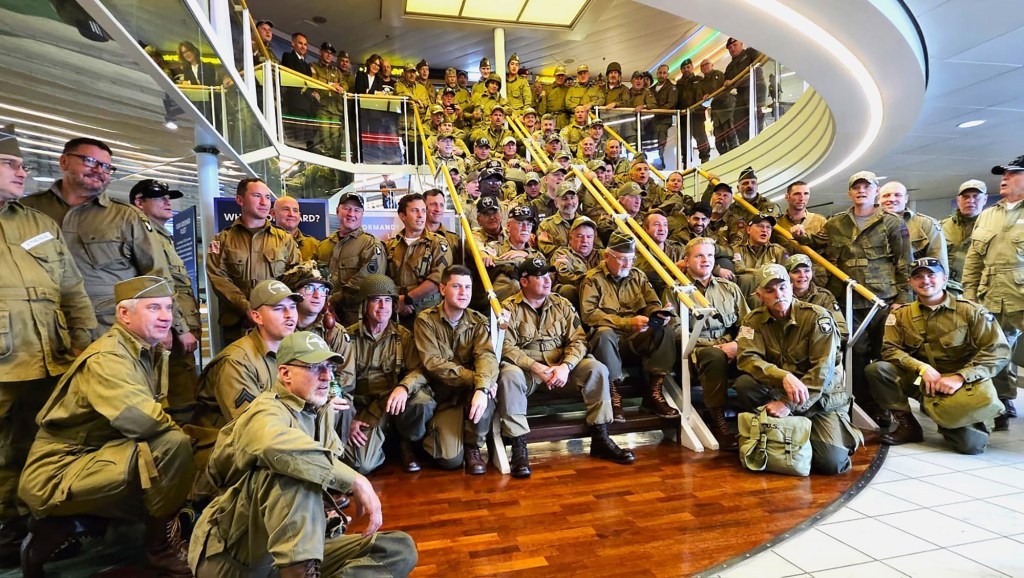
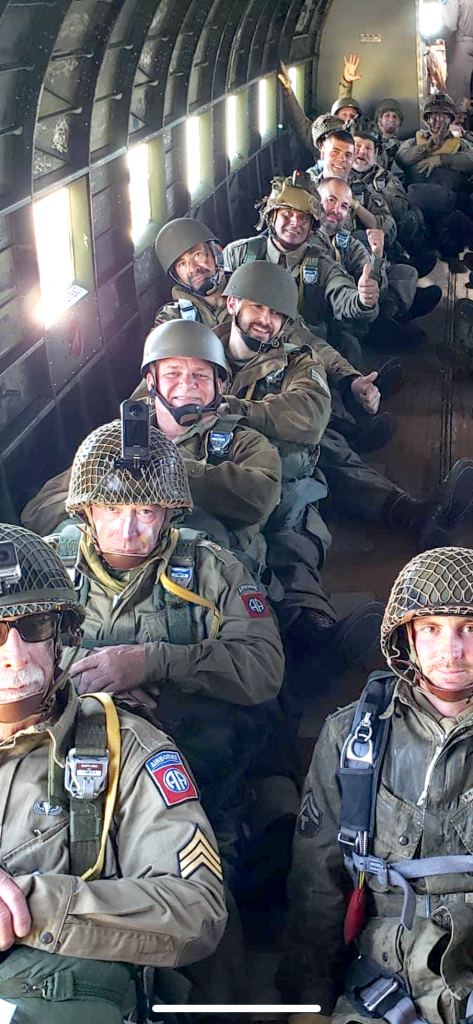
Jumpers – some as old as 80 – participated in the 200-person re-enactment of the D-Day parachute invasion, complete with period appropriate gear and uniforms.
“The best words ever spoken to me in my life were, ‘Six minutes! Stand up!” joked Beaulieu, losing feeling in his legs by the time the plane arrived over France. While the five-and-a-half-hours in Second World War attire may not have been comfortable, it was a glimpse into the experience of the many paratroopers who made the trip in the very same aircraft 80 years ago.
Apart from the passport control team awaiting on the ground and the crowd of spectators that could be heard clapping and cheering from the skies, the attention to detail given by all those who participated, from working war-era vehicles to civilians dressed in clothes from the period; made the “paratroopers” feel like they were stepping back in time.
“Everyone’s done up in costumes, like, even civilian women downtown: hair done up like Rosie the Riveter, bright red lipstick; the amount of detail – it’s amazing,” said Beaulieu.
The veteran aircraft used for the flight were the same planes that crossed the English Channel June 6, 1944. “Placid Lassie,” named after its wartime radio operator Staff Sergeant Ed Tunison; was accompanied by fellow C-47s “That’s All, Brother” and “Pegasus.”
“These are 80-plus-year-old planes, so they’re not going to last too much longer. That’s why it means so much to us to be able to jump out of them. It’s like a flying museum,” said Saunders.
“Even the quarter panels on the inside, they’ve got writing on there from the Second World War,” said Beaulieu.
Plans for the Round Canopy Parachuting Team’s (RCPT) Normandy jumps were set in motion when both Beaulieu and Saunders were parachuting in Florida with Kevin Waugh, a friend and coworker from their days working with Heron drones in Afghanistan. Waugh said he’d love to jump in Normandy.”
Following a bit of research, one of the members of the RCPT club promised Beaulieu he’d get in touch once the organization planned on manifesting jumps for the D-Day 80th anniversary. It wasn’t long until Beaulieu received a call from Pete Sotos, another club member, who told him spots were open. The Canadian trio rushed to sign up.
Even though both Beaulieu and Saunders have prior Airborne experience in the Canadian Armed Forces, as well as experience jumping out of a variety of aircraft through the RCPT and the Phantom Airborne Brigade club, jumping into Normandy as part of the memorial parachuting operation was a new experience.
“First time I ever packed my own ’chute,” said Saunders, who finished his packing by the light of a cellphone. “Gab, being a search and rescue technician – to him, it was no big deal.”
“Phew, I was sweating!” said Beaulieu, describing the exciting, nerve wracking, experience.
As Saunders explains, in the Airborne, parachuters build trusting relationships and bonds quickly.
“My experience with jumpers, it’s like, you just meet the guy and then, pretty soon, you’re on a stick together and you’re checking each other’s gear, helping each other get dressed. I find, with paratroopers, brotherhood – it’s like pretty much instant because there’s so much trust. If there’s a problem in the airplane, either you’re all going to get out or no one’s getting out.”
The camaraderie between the three Canadians was admired by many American participants. Beaulieu was even approached by one of the group’s retired colonels shortly before their departure, who commented the Canadians brought “a calming presence to the area.”
Apart from the unfortunate loss of Beaulieu’s cellphone in the chin-high grass of a Carentan hay field (and the hives Saunders broke out in during the ensuing search), the landing into France was described by the Greenwood duo as an amazing experience.
“As I was preparing to land, I heard John call out to me, ‘Jim, watch out for the deer that are running underneath you!” said Beaulieu.
While the jump itself was thrilling, it was the people that the Canadian team met during their trip that made the visit so memorable.
“It’s an amazing experience,” says Saunders. “The appreciation and everything is still right at the forefront.
“This older man came up, and he said it was because of Canadian soldiers he was still alive today. He was five years old on D-Day, and the rest of his family had been killed because they were Jewish. He said Canadian soldiers looked after him for a bit until they were able to get him to some French nuns.
“He was with his wife, his kids, grandkids – it was just amazing. It was pretty emotional.”
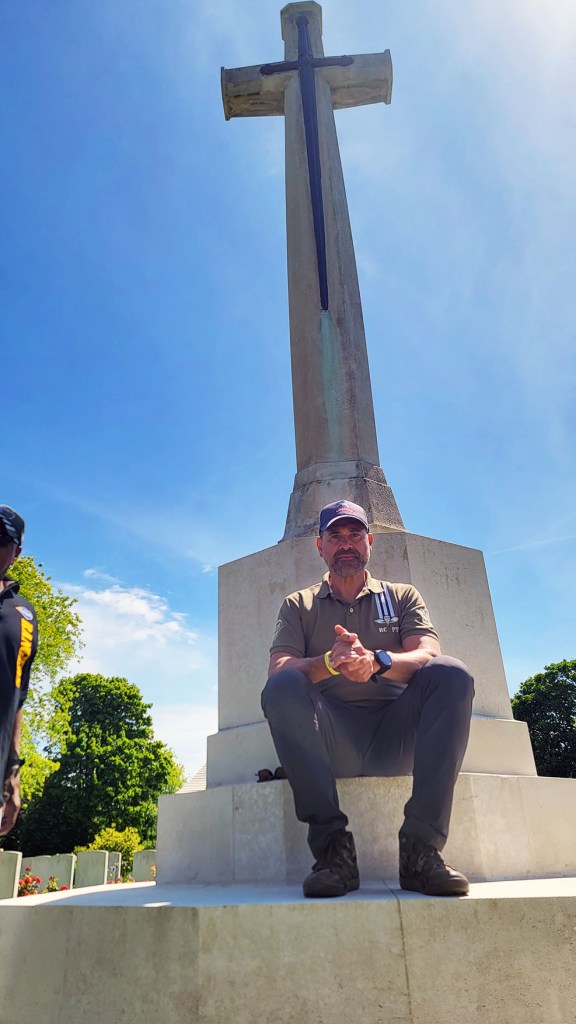
In between jumps in Carentan and Azeville, the group visited the Canadian wartime Beny-Sur-Mer cemetery and nearby landmarks, such as Sainte Mère-Église and Pegasus Bridge. While there is just simply too much to experience in Normandy for a week-long trip, the team is thankful for the local hospitality, and being included by the American jumpers’ group.
“My favorite part of the whole experience was jumping with the other guys, meeting different people, and getting to know each other,” said Beaulieu, already making plans for his next jump and, hopefully, revisiting France for D-Day’s 85th anniversary.