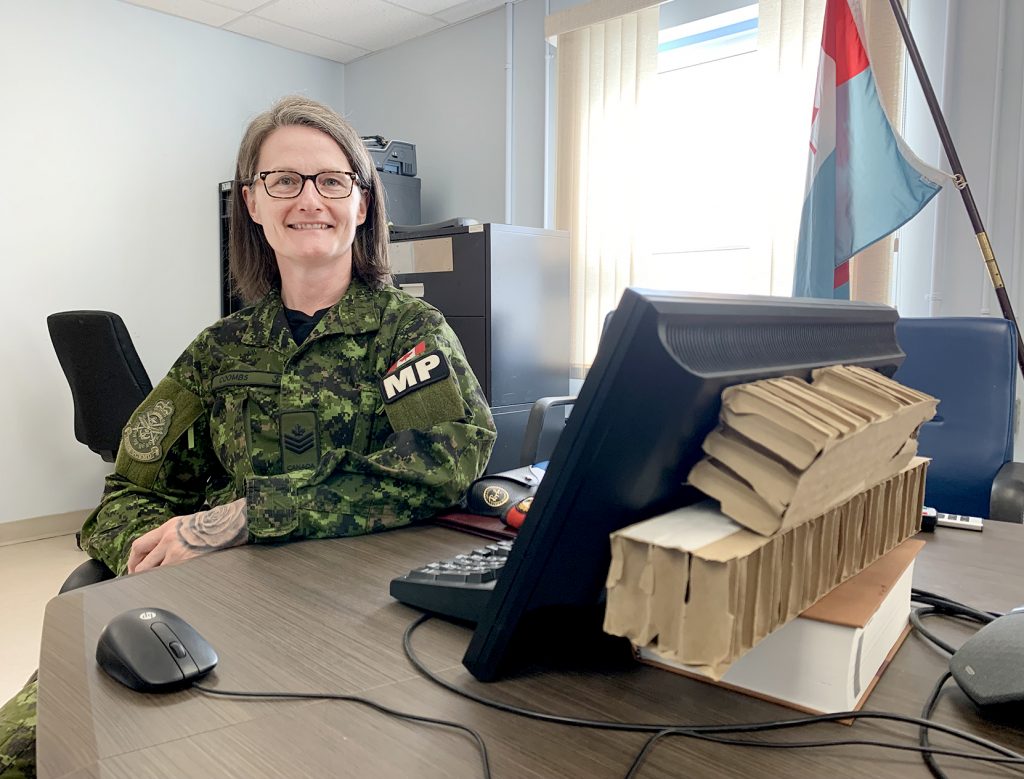
Security awareness crosses work, personal practices
24 Military Police Flight member Petty Officer Second Class Shannon Coombs doesn’t really want to bring the weighty business of security awareness and training to 14 Wing Greenwood personnel, but it’s her job to make people aware of their obligations for military security. Real-life advice of why they should might help it sink in.
“Those stickers on the back of your car – the dad, the mom, the two kids, the dog, the cat. Veterans’ license plates. Pictures of you and your spouse at the airport, heading south. Talking to someone you meet who has lots of questions about what you do. Posting on social media while you’re deployed. Taking work home, or working from home, if there are other people coming and going in your house.
“Security awareness is important because we don’t want people put at risk, inadvertently or otherwise.”
Formally, Coombs is the security officer for 14 Wing Greenwood. With a network of unit security advisors, they promote the Director General Defence Security’s program of awareness and training. They help advise wing and unit activities, make plans for building security and access control, and address questions from a security perspective. In serious incidents, support investigations and remedial actions.
“There is an annual week in February we promote for security awareness but, really, its 365 days a year – security should always be in the background,” Coombs says. “There are no parameters to paying attention.”
Work travel and security may be more obvious for Defence Team personnel: travel, equipment and mission details are heavily coordinated. Leave passes have a line so your supervisors know where you will be – but it’s up to you to pay attention to countries Canada monitors for travel risks.
Personal vacations may be more relaxed, but Coombs cautions: don’t take your work-issue laptop or duty phone. Roaming fees will accrue, and there is a lot of information on that equipment that may be gleaned if they fall into the wrong hands. If you must travel with work equipment, get prior authorization. Photocopy your documents – passports, ID, flight tickets; and keep them with you or secure at your hotel. Having access to that information at an embassy far from home will be helpful.
“And you’re on vacation: you meet people, you’re chatting – don’t advertise what you do. You could meet people at Disney, you could be beside them at the restaurant. There is always a reason people ask questions.”
Coombs says there will be a renewed effort to share solid security tips – essential for a defence-focused workplace, but advisable in personal behavior, too – through the 14 Wing unit security advisors, wing wide emails and posters, and promotion of resources on the Defence Team’s intranet (look for the Director General Defence Security’s page).
“Security awareness is about educating people and working to prevent situations. People get complacent – but complacency is an unhealthy habit. The world is changing, and change is good – but it does bring new risks. We’re all in it together, and there are so many good security resources and people to help.”
Solid security dos & don’ts
- Use separate user accounts for work and personal emails. Don’t let other people use them.
- Have a dedicated workspace if you’re working from hom: don’t leave material and equipment accessible if there are people in and out of your home.
- Do not use unauthorized USB devices in Department of National Defence equipment. Get an approved one from your unit security advisor.
- Keep your antivirus programs up-to-date.
- Keep your social media profiles private or vague.
- Don’t post to social media if you are preparing to or are travelling or deployed. Make sure your family members aren’t sharing your whereabouts or pictures from away on their accounts, either.
- Travel safely: check for risk levels or advisories at your destination. Don’t take work equipment (lap-tops, duty phones…). Don’t use public, unsecured wifi.
- Make copies of your documents (passport, birth certificate, plane tickets, insurance paperwork), and keep them safe.
- Don’t advertise you’re military, or work at a military base. Think about what you disclose in poolside chatter, or idle conversation in a waiting room.