While one group of Royal Canadian Medical Service combat medics spent the week sharpening their clinical skills, others were honing their military skills, proving readiness comes in many forms.
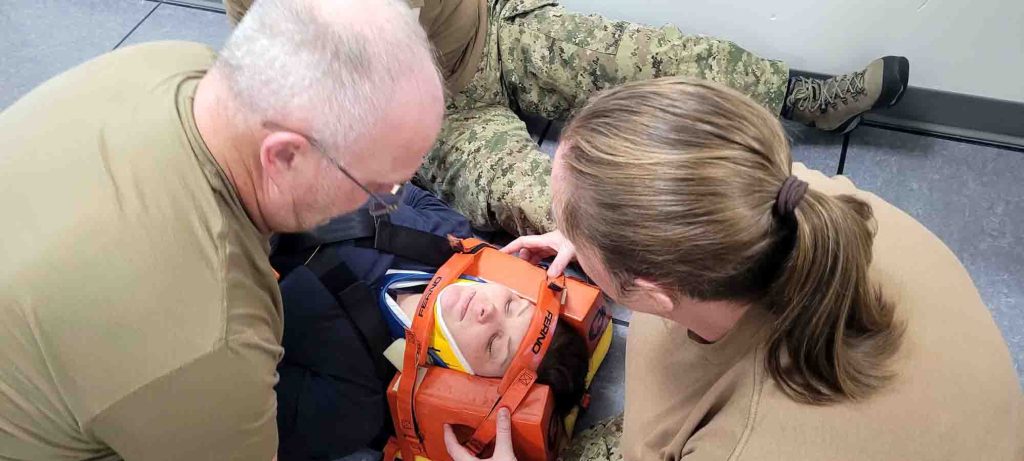
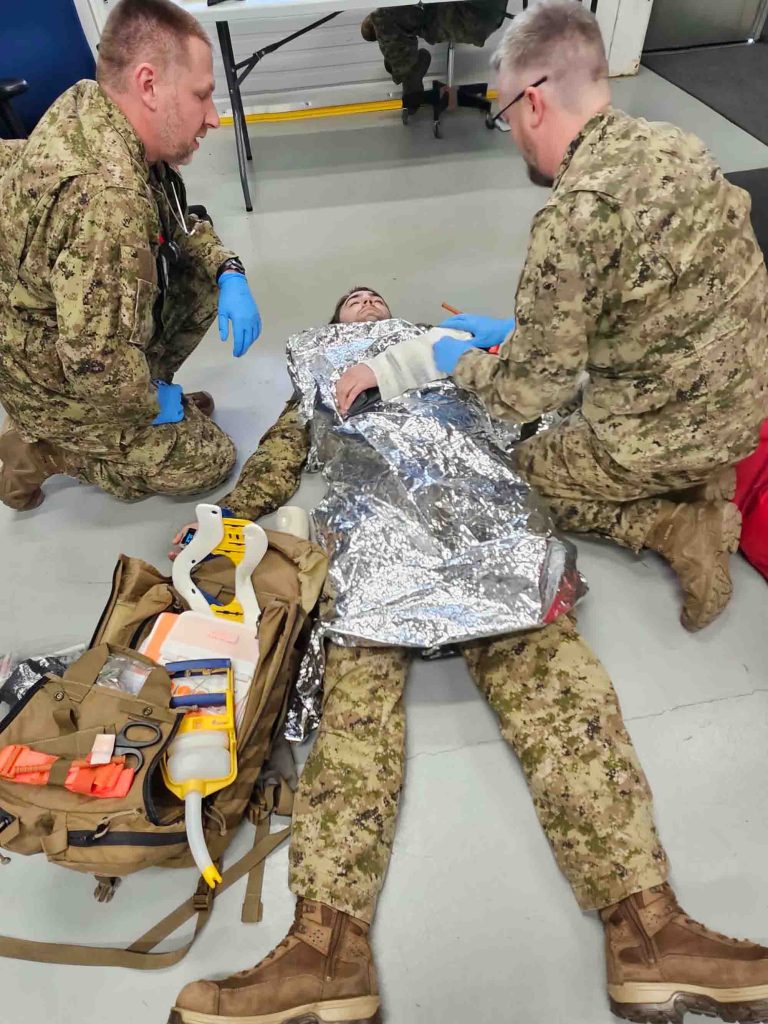
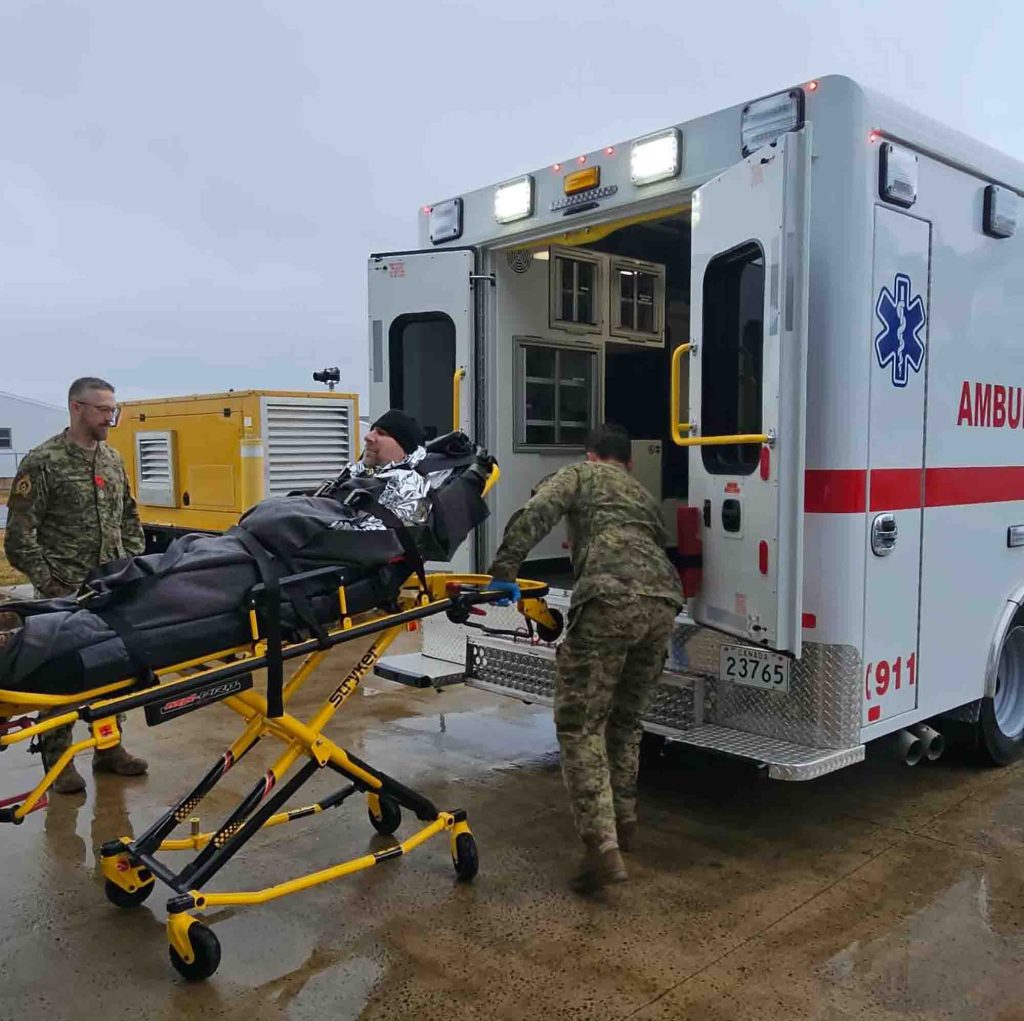
November 2 to 6, senior combat medics from across Canada converged on 14 Wing Greenwood to complete Emergency Medical Responder (EMR) training at 26 Canadian Forces Health Services Centre, enhancing their clinical capabilities and meeting evolving scope-of-practice requirements. Experienced Regular and Reserve force personnel from CFHS units in Winnipeg, Moose Jaw, London, Toronto and across the Atlantic region, including 33 Field Ambulance, Canadian Forces Health Services Centre (Atlantic), and both 26 and 27 Canadian Forces Health Services Centres; attended. EMR training focuses on core emergency care skills, including patient assessment, resuscitation and life-saving interventions – all essential tools in maintaining a medically-ready force.
The week marked more than just a successful course. After years of challenges accessing this training, 26/ 27 CFHSC was also able to qualify its own instructor from Goose Bay, creating regional capacity to deliver future courses and improving readiness across Atlantic Canada.
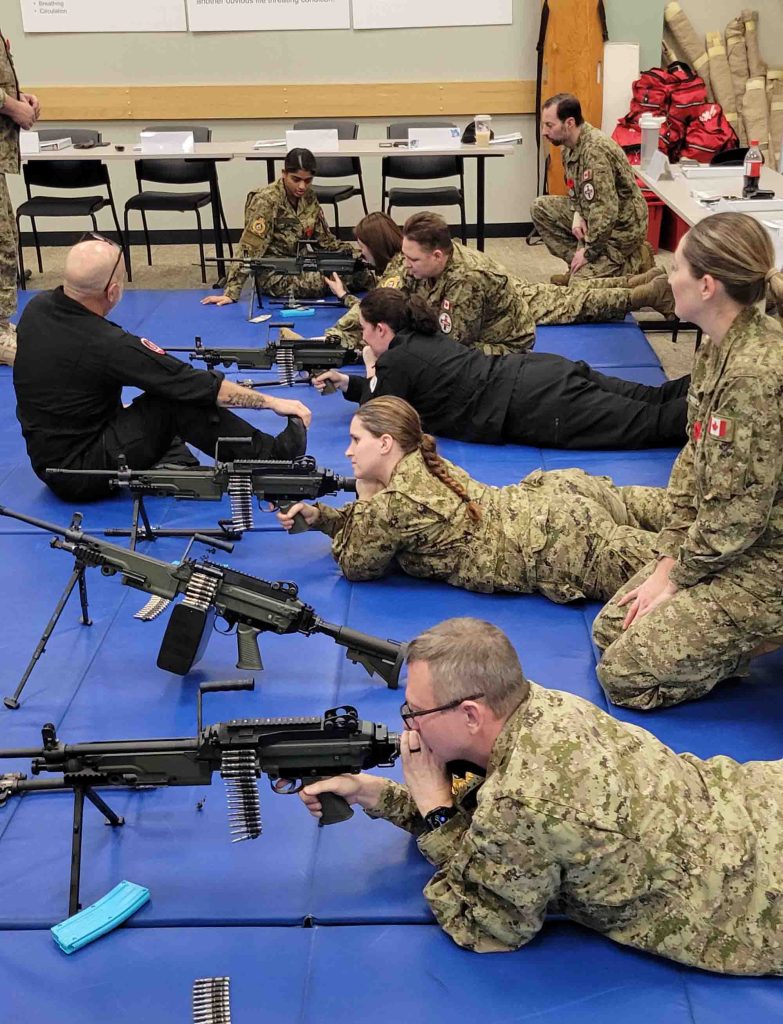
At the same time, a second group of 26 CFHS personnel from across the unit’s many disciplines, including administrators, doctors, nurses, pharmacists, combat medics and paramedics; traded the clinic for the classroom. November 5, members participated in a half-day familiarization with the C9 light machine gun and fragmentation grenades, led by 14 Wing Readiness Training Flight. Through safe, hands-on instruction, participants gained a better understanding of the equipment and operational environments encountered by the soldiers they support.
Although the two groups spent the week engaged in very different activities, both were working toward the same objective: readiness. One group focused on strengthening the clinical skills needed to provide emergency care, while the other refreshed the soldier skills and operational awareness that make military healthcare providers effective members of the Canadian Armed Forces team.
Whether learning new lifesaving techniques or becoming familiar with the tools used in the field, the message is the same: military medical professionals must be ready to care for soldiers, sailors and aviators; and understand and operate within the environments in which peer military members serve.
One week. Two training activities. One common goal: readiness.