CIS Flight takes on Noble Skywave comms competition
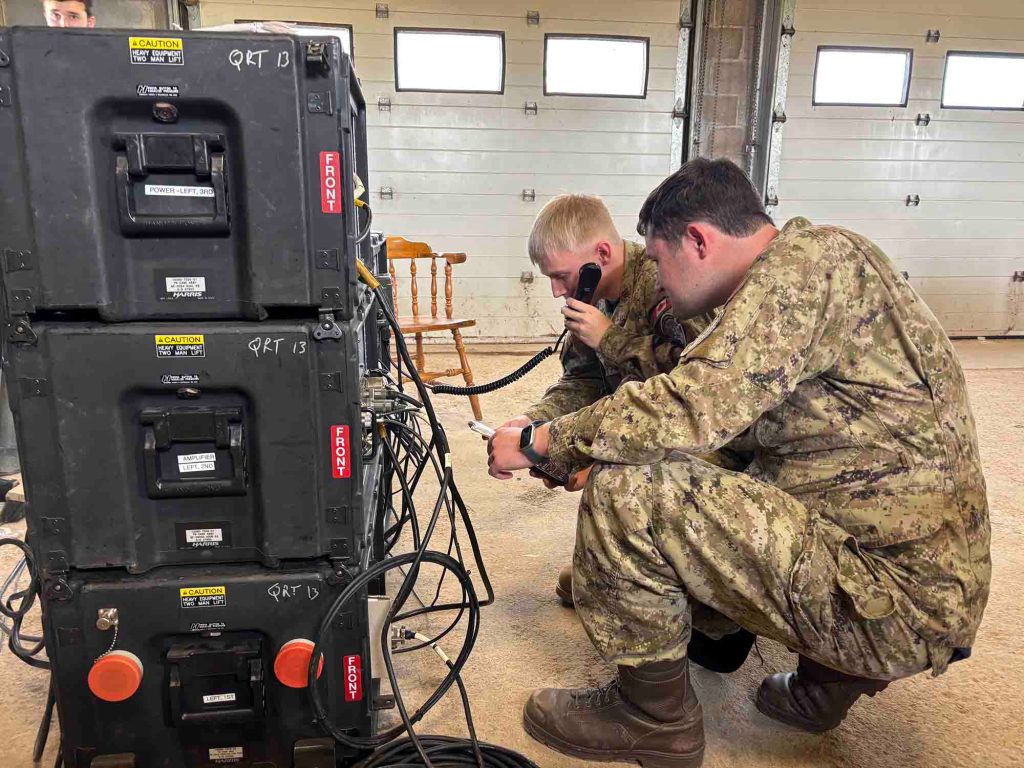
All agree: the best lesson learned from the 2025 Exercise Noble Skywave? How and where and which cables go into the portable radio equipment and antenna during the in-the-field competition.
“They only plug one way, but we used lots of diagrams – that helped a lot!” said 14 Wing Operations Support Squadron’s Communications and Information Systems Flight exercise lead Second Lieutenant Yuval Mashiach.
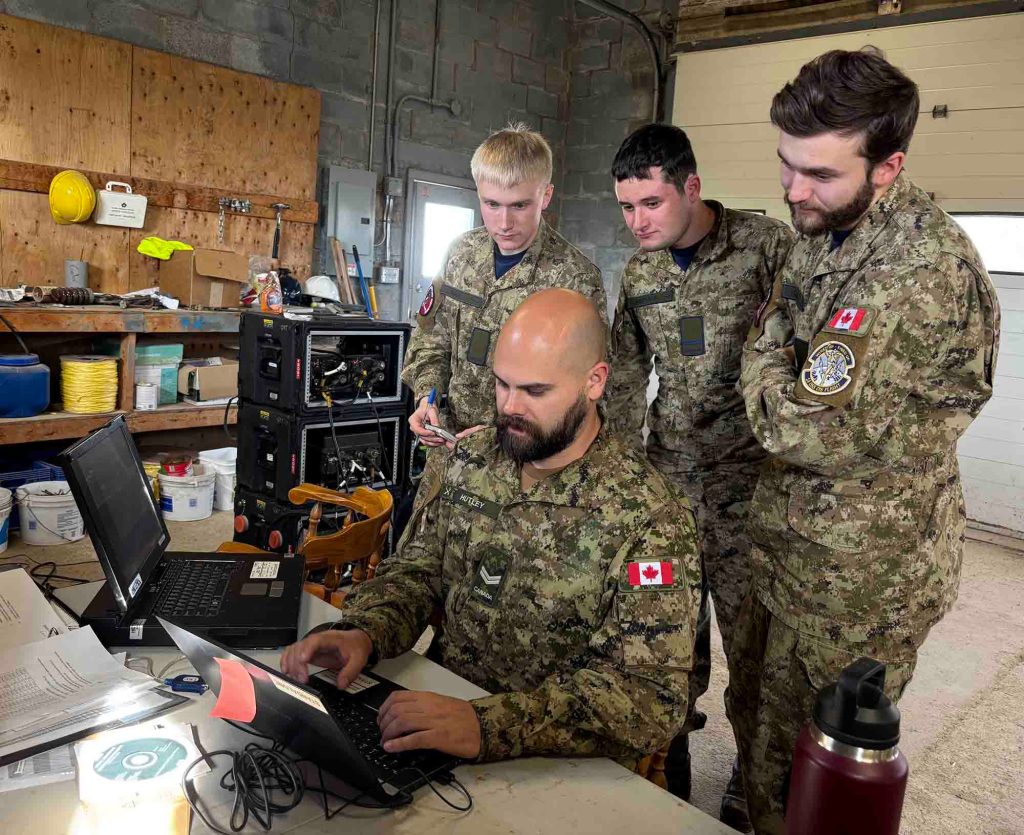
The 2026 contingent from CIS Flight made quick use of a simple cable cheat sheet, created last year and now living inside the flight’s kit. Set-up at the Newport Corner Naval Radio Station first thing October 20 went “pretty smoothly,” said Mashiach, with their first radio check-in with the organizers, the Canadian Forces School of Communications and Electronics in Kingston, Ontario; just after 12:30 p.m.
“We were going to set the antenna up in one place, but didn’t have enough cable to reach our radio equipment. So, we set it up again, closer, but not to full height: 40 feet, instead of 50 feet, in case it falls.”
The portable antenna tucked in like a baby amid Newport Corner’s towering array of antennas, but it did the job through most of Noble Skywave’s three-day series of competitions. Since 2013, CFSCE has organized the high frequency radio competition, with international military and civilian teams attempting to communicate with each other via skywaves. Designed as a Canadian Armed Forces training-first exercise, the competitive aspect of the event, this year, attracted 260 teams.
CIS Flight used junior personnel to staff its portable station 24 hours a day from that 8 a.m. start October 20 to the 3 p.m. end October 22. Mashiach, running the event as part of his on-the-job-training project, reviewed potential sites and briefed leadership on his choice; then coordinated the shift schedule, transportation, meals and equipment preparation.
“This is really fun,” he said. “We’re trying to reach other teams – we were talking to the United Kingdom earlier. It’s basically a radio check: their number, our number, they tell us how they hear us, and over.”
CIS Flight operated as call sign CA 79 through Noble Skywave’s four components. During the Free Play competition, the goal was contact with as many teams as possible, with points awarded on the type of contact: voice, data or 3G. During the Team Contact Challenge, within specific groups and confined to specific frequencies, points were awarded for highest contacts. The Back to the Future competition challenged teams to reach as far as possible by distance, whether through, say, seven contacts at 1,000-kilometre distances, or one contact at a 7,000-kilometre distance. Both teams have to acknowledge the contact, and enter it into the live-tracker website to have it count. All the scores combine for the Noble Skywave final standings.
“There are a lot of United States teams, signal regiments; so they have more experience – but, a lot comes down to luck with the weather, and how the signal bounces.”
CIS Flight placed 78 out of 174 teams in the Free Play challenge. An afternoon dead spot through the Team Challenge hampered contacts, but they plugged away to finish 55th out of 119 teams. Then, during the Back to the Future contest, antenna trouble knocked them out. Overall, CIS Flight placed 140th out of 260 teams.
“We had 14 people from the flight coming throughout the competition, getting hands on the equipment – and that is all confidence building.”