Museum’s helicopter headed for 14 AMS techs’ restoring hands
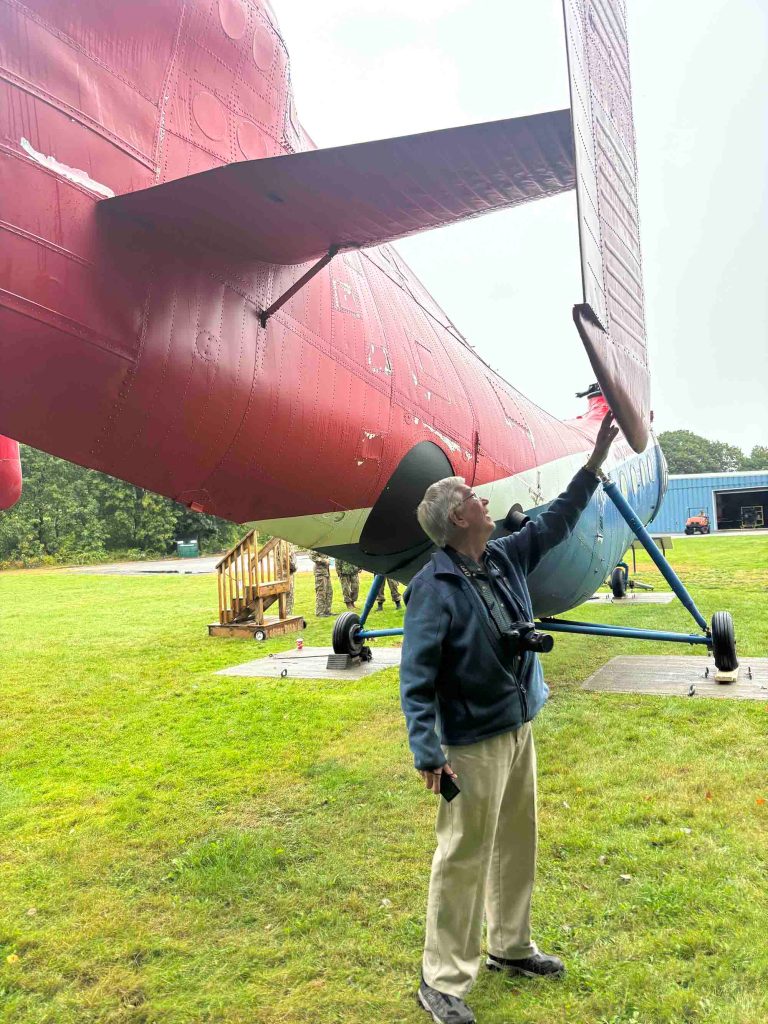
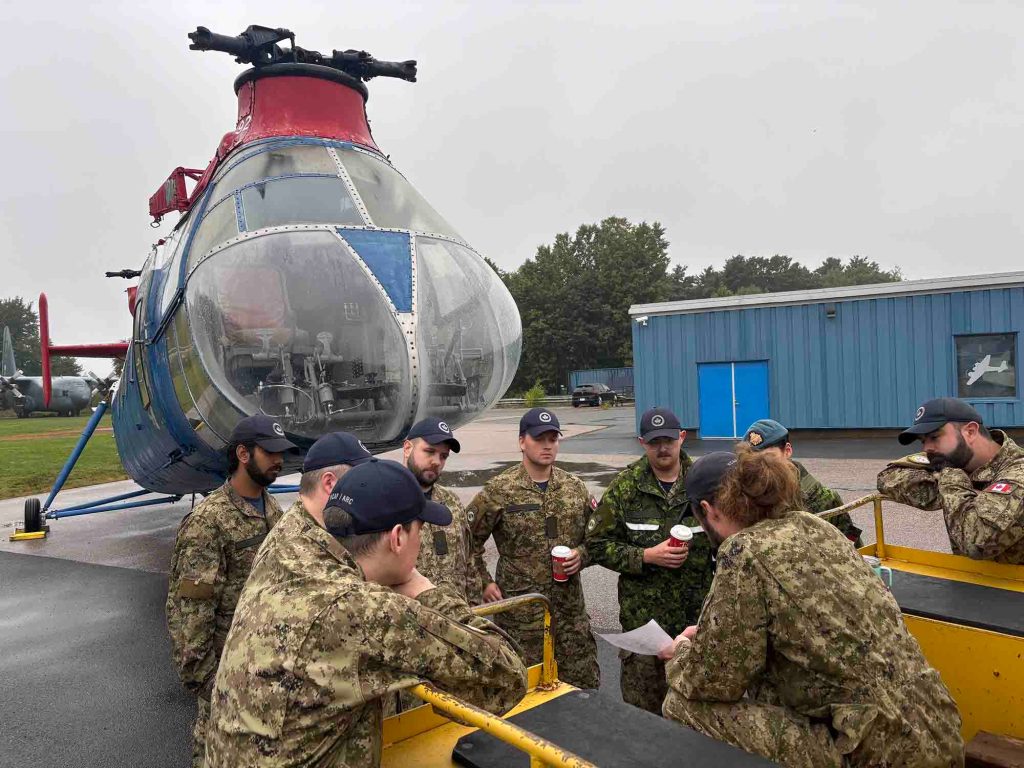
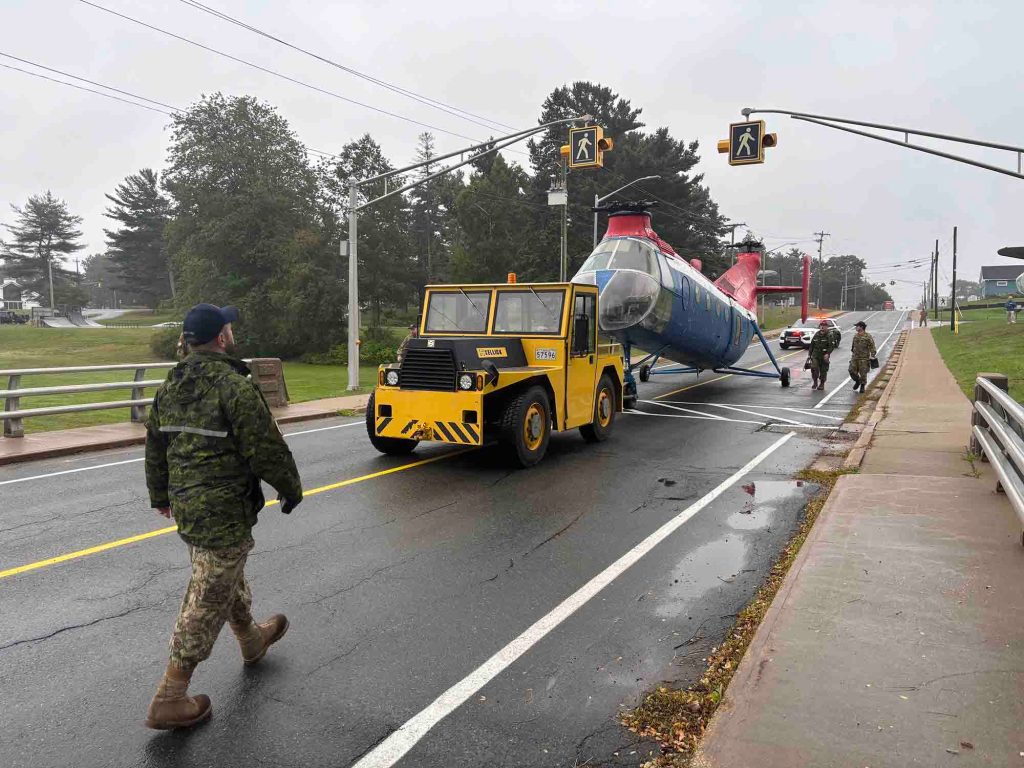
The Greenwood Military Aviation Museum’s Piasecki/ Vertol H44 “Flying Banana” is getting some love, moved from its airpark display September 21 across 14 Wing Greenwood and into the caring hands of 14 Air Maintenance Squadron’s technicians.
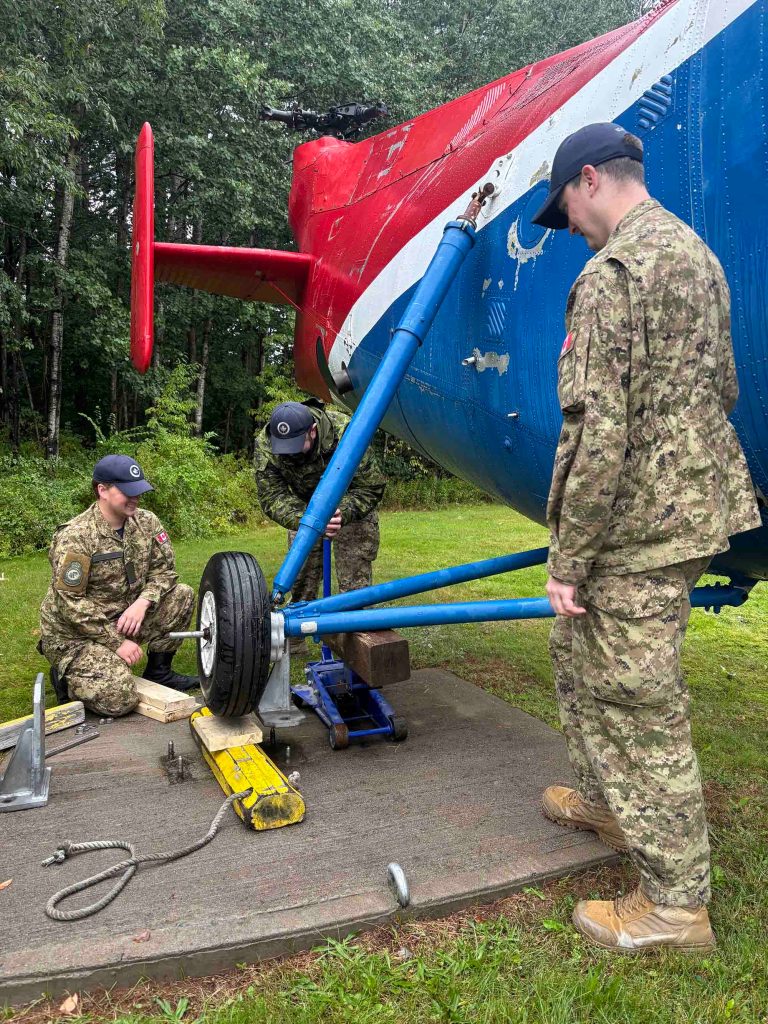
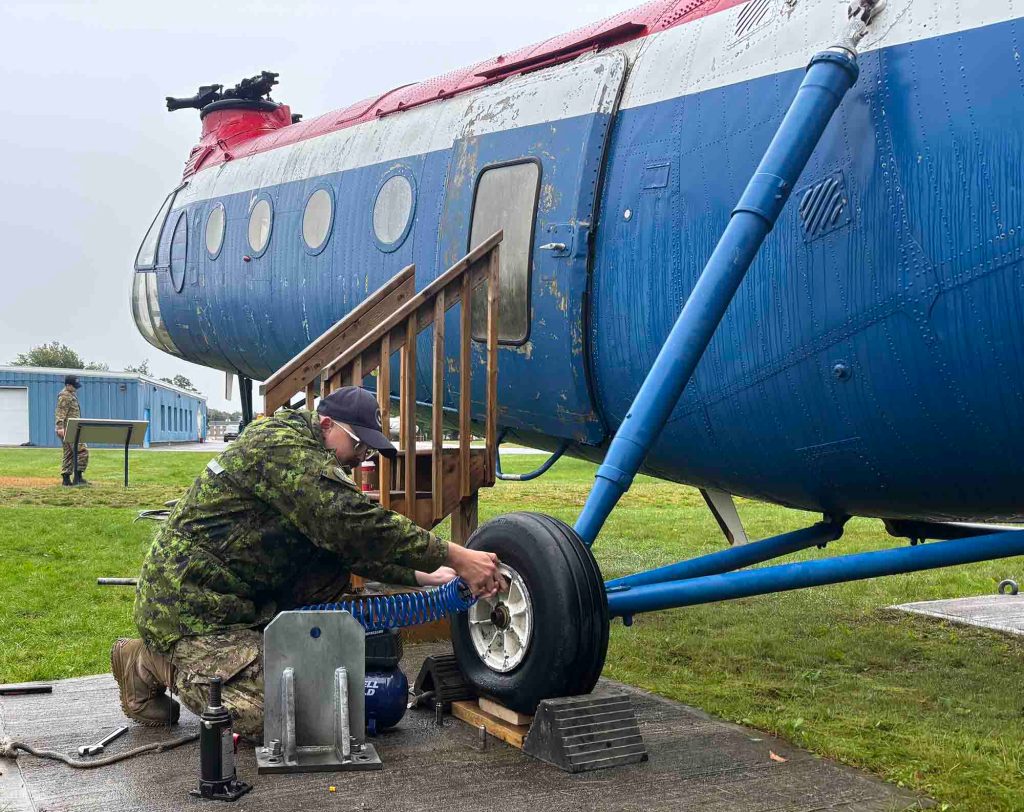
A crew of techs were at the museum bright and early to inflate the tires, hook on the tow and then walk alongside a mule from the grounds, through the base main gate, across parade square and onto the airfield; heading to the south side periodic maintenance bay at 10 Hangar. There, they’ll chemical strip off failing paint, repair light damage and then repaint and reapply new decals, made in the aircraft structures shop. The work will likely take several months, all of it a training opportunity and log book bragging rights for the techs who have a hand in the work.
“All these techs are switched on – ready to go,” says Corporal Quinton Rumble, a 14 AMS member seconded to the museum for the next couple of years. “A couple of them worked on the Dak (the airpark’s Dakota KN451, flown by 103 Rescue Unit, also recently restored).”
This Piasecki is a two-part aircraft: the rear section comes from Aircraft 592, which also flew with 103 Rescue Unit in Greenwood from 1961 to 1964. The aft section is from a United States Army-flown helicopter.
“I was in Wetaskiwin, Alberta, recovering arts for our museum’s Bolingbroke restoration,” said museum volunteer Bob Johnson, of his visit to the Reynolds Heritage Foundation. “592 was sitting there in a field, and I told the fellow, ‘I know the history of that helicopter.’ He had the army forward fuselage there, too, and it was his plan to piece them together, too. He said we could have them both.”
592’s nose section was destroyed in the mid-1970s by a snow plow, while operating in Northern Canada. Bringing it home to Greenwood in 1993, with the army front piece, started a decade-long restoration in the museum’s workshop.
Museum volunteer Malcolm Uhlman was one of the first on the original Piasecki restoration, and he was there September 21 with the 14 AMS tech crew to watch the move for its newest restoration.
“I’ve got a few hours on this… we had a real good time on this – lots of memories,” Uhlman said. But, long before the helicopter arrived at the museum in pieces, Uhlman can see “clearly in my mind” the day the Greenwood flying crew lent him and some friends a hand.
“This helicopter has real heart for me. When I was a youngster, we were skating and playing pond hockey on the meadow by Gene’s barbershop. We were scraping the ice and this guy, he saw us, and came right down and blew the snow off the ice for us. Imagine!
“That’s a memory. I’d love to know who that pilot was.”
The helicopter, with its Arctic capabilities, was used by the Royal Canadian Air Force for rescue work, and carried supplies and people along the Mid-Canada radar line across the Canadian Arctic.
“It was a good helicopter,” Johnson said. “They did the same thing here in Greenwood the Cormorant does today; it was just replaced with new capabilities.”
As the museum’s Bolingbroke project came to the top of its to-do list in 2013, to make space, the Piasecki moved from the workshop to the airpark.
“That was a cruel morning: there was snow flying in the air and we were putting in those last top metal panels – oh, our hands…. Too quick,” says Uhlman. They didn’t get the full-length rotor blades on before winter, and water got in to the rotor heads and seized the machinery, which then couldn’t be turned to get the blades on at the right angle. The poor Piasecki has been bladeless since, with a fading paint job.
“Hopefully, these guys will do all this for us. The blades, repainted the same colours. I can’t wait. I know they’ll do a good job.”
For more on the museum’s full restoration of 592, visit https://www.gmam.ca/airpark/h44