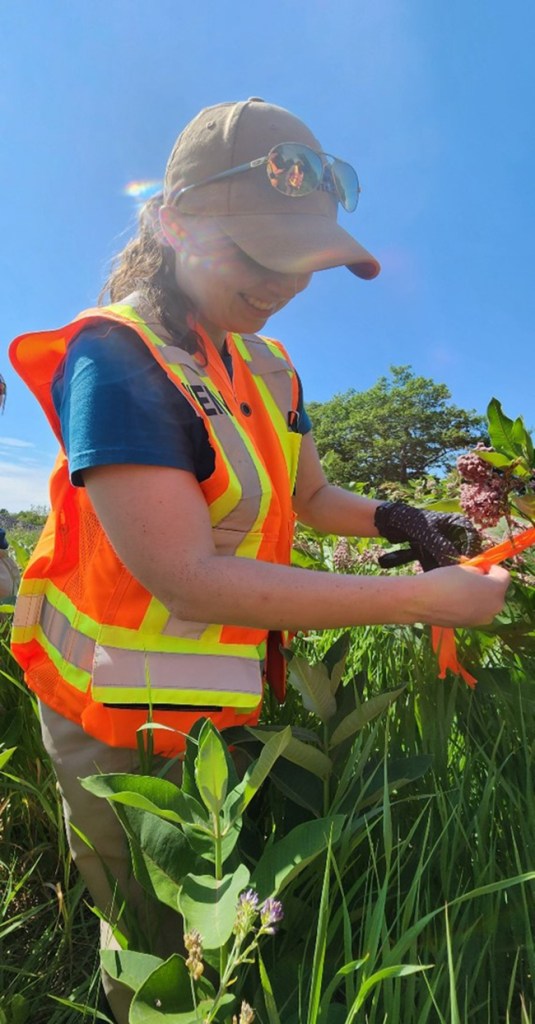
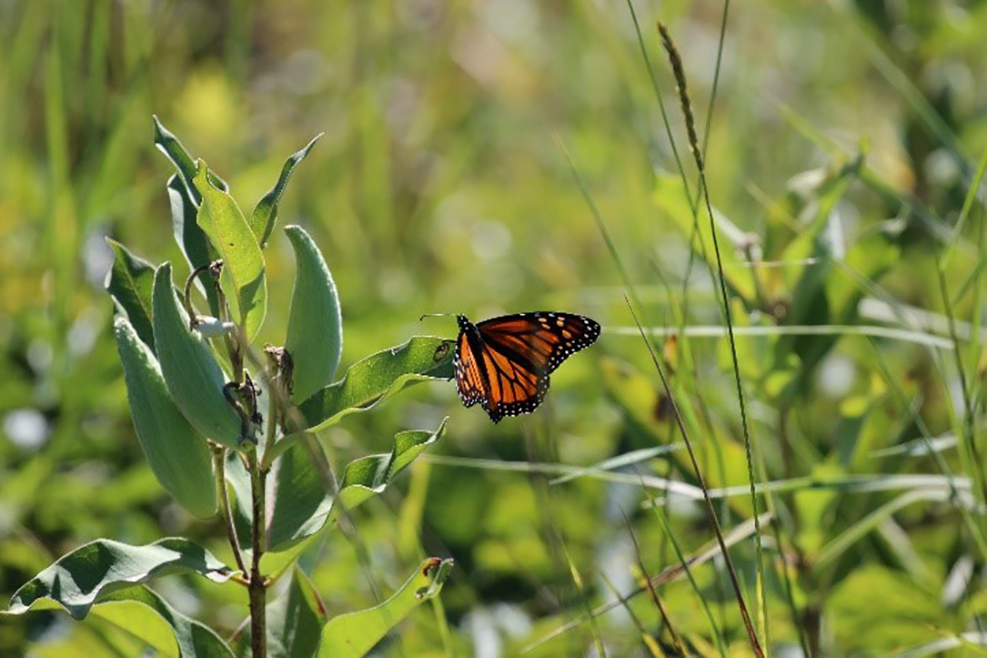
You may notice the CP140 Aurora and CC295 Kingfisher aren’t the only things flying around Greenwood this summer. The monarch, a species of butterfly known for its iconic orange and black wings, has made its way to Atlantic Canada for the season.
Each year, the monarchs we see in Nova Scotia have arrived from one of the longest insect migrations in the world, travelling up to 5,000 kilometres from Central Mexico to Canada. The monarch butterflies found in Atlantic Canada usually belong to the Eastern population, spending their winters in Mexico’s oyamel fir forests before moving north each spring to breed. In the fall, a later generation makes its return south.
Once the butterflies arrive in Atlantic Canada, they rely on milkweed – the only plant on which they both lay their eggs and source their food during the caterpillar life stage. Several generations complete their life cycle from May to October in Canada, starting as eggs, then hatching into caterpillars, with five distinct growth phases (instars); followed by transformation into a chrysalis (cocoon) and, eventually, emerging as adult butterflies.
What makes this insect so important to our environment? Monarchs are pollinators, meaning adult butterflies help move pollen between flowering plants, which helps plants produce fruit and seeds, supporting crops like strawberries, zucchini and squash. The monarch butterfly is also considered an indicator species, meaning its population trends can reflect the overall health of an ecosystem. If something is going badly for these butterflies, like a decline in their numbers, it can signal a broader environmental issue: pollution, impacts from extreme weather events or decreasing biodiversity.
Unfortunately, monarch numbers have fallen in recent decades. A 2025 study by Mitchell et al. estimated the monarch population declined by 84 per cent between 1993 and 2024. In Canada, habitat loss, climate change and the use of insecticides and herbicides have all been cited as major concerns for the species.
Because of these threats, the monarch is listed as an endangered species under Canada’s Species at Risk Act (SARA), meaning they are in danger of disappearing from the wild forever. On federal lands, including 14 Wing Greenwood, SARA ensures these butterflies are protected by law. It’s illegal to catch, hurt or kill a monarch during any phase of its life cycle (egg, caterpillar, chrysalis or butterfly). If a milkweed is found to have a monarch presence, the plant itself also becomes protected. Measures like this help conserve a threatened species right here in the Annapolis Valley.
How can you help? Plant native swamp milkweed and wildflowers where you can, in a community garden, yard or flowerpot (swamp milkweed can be toxic to livestock; take caution in planting, and well away from grazing areas). Native wildflowers like spotted geranium, cut-leaved coneflowers and goldenrods provide food and habitat not only for monarchs, but for other pollinators including bees, moths, beetles and hummingbirds. Check your nearest garden centres for seeds and packets of native Nova Scotian plants.
Try to leave existing milkweed patches undisturbed, and reduce mowing where possible to ensure monarchs find a home. If mowing is required, try to reduce mowing to once or twice in a summer season. Avoiding the use of pesticides and herbicides is also beneficial, helping the monarch and other non-pest species of insects, plants, birds and animals.
As monarchs drift through the Annapolis Valley this season, take a moment to think about the importance of pollinators and their habitat, and that, much like the aircraft at 14 Wing, these butterflies also depend on safe places to stop and refuel to continue their journey.
To learn more about the monarch butterfly, visit the Species at Risk registry on the Government of Canada website, https://species-registry.canada.ca/index-en.html#/species/294-90#description