Search and rescue family marks 20 years of loss, remembrance
Love, respect and a lasting legacy of hands-on safety remain with the 413 (Transport and Rescue) Squadron family, both its personnel and the extended network of relatives and friends that remember lives lost.
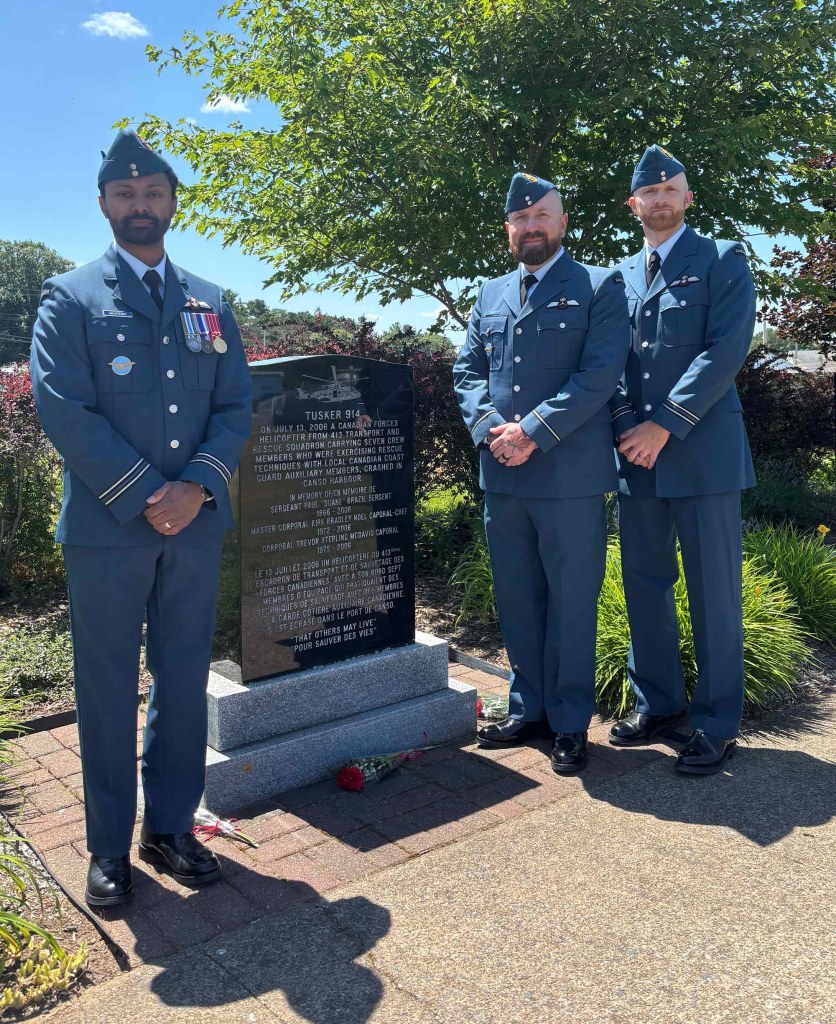
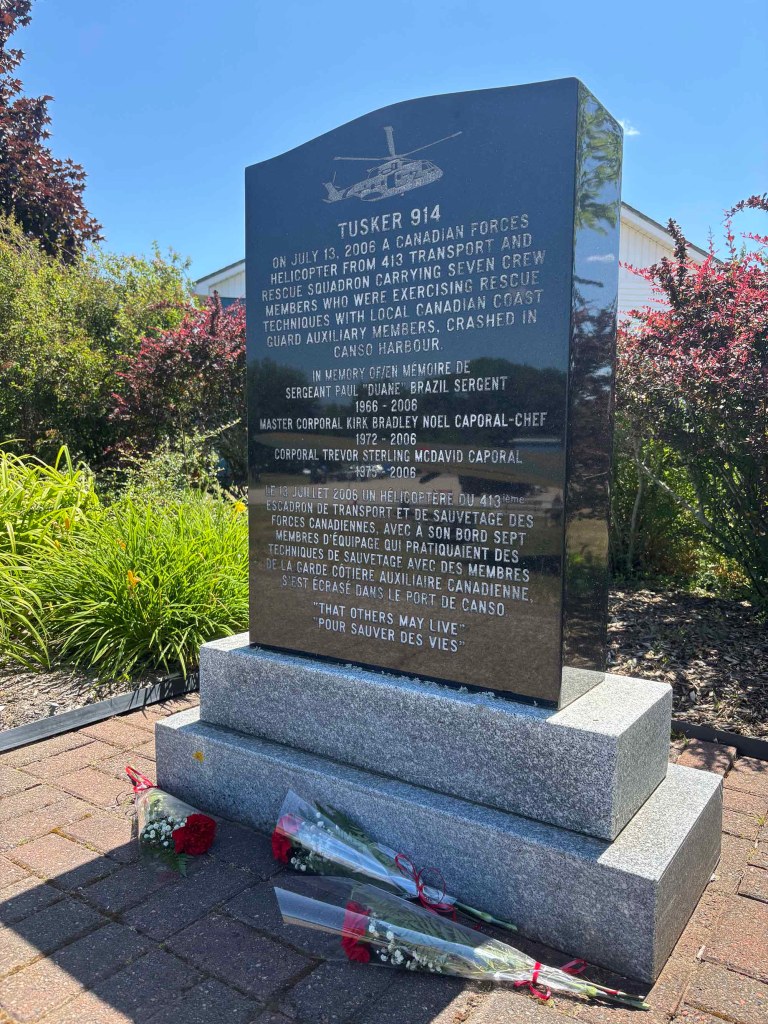
July 13, the squadron held a 20th anniversary parade and service at 14 Wing Greenwood to honour the crew of CH149 Cormorant 914 – Tusker 914. In a midnight training crash into the waters off Canso July 13, 2006, three men died. Sergeant Duane Brazil, 39; Master Corporal Kirk Noel, 33; and Corporal Trevor McDavid, 31; were unable to escape the submerged helicopter. Four others aboard were injured: Sergeant Martin Maloney, Captain Ronald Busch, Captain Gabriel Ringuette and Major Gordon Ireland.
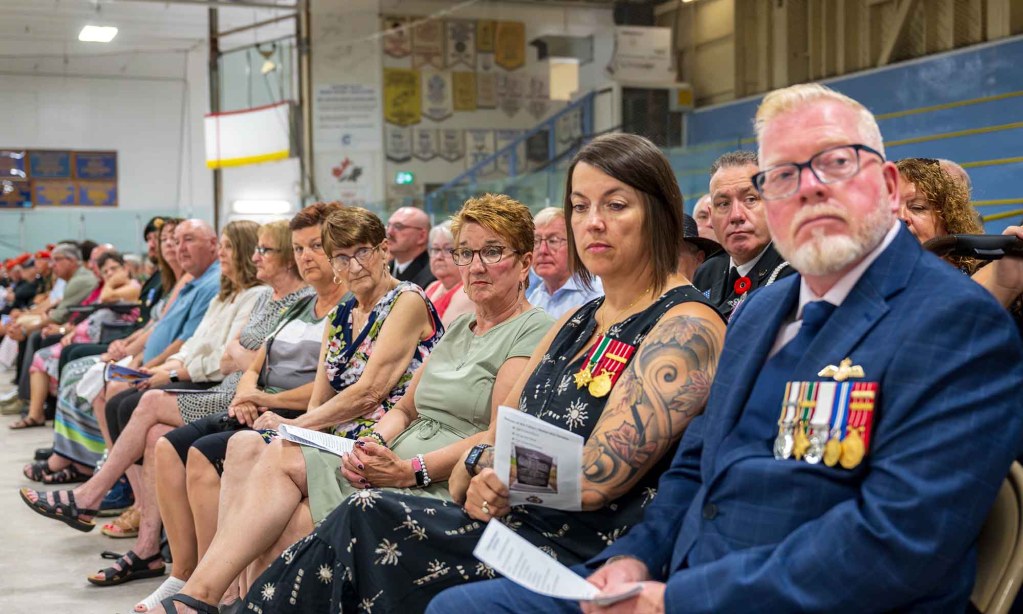
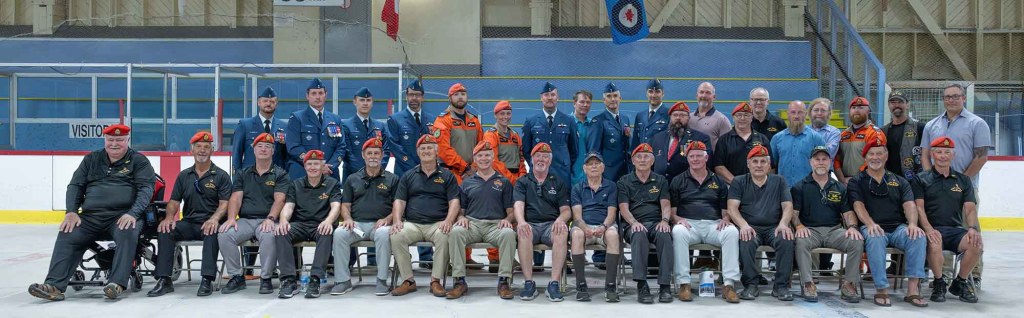
The front rows of the service were reserved for Tusker 914 crew’s relatives, and seating included many veterans and serving members from 413 Squadron and the wider search and rescue community.
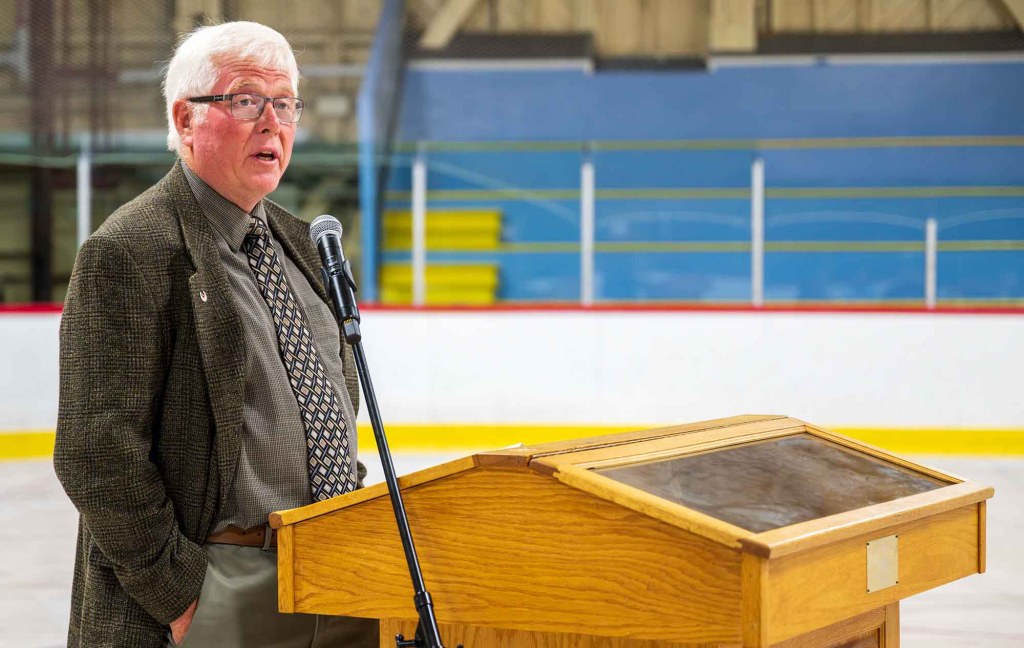
“The legacy of Duane, Kirk and Trevor lives on every time we train, challenge each other to be safer, and work to rescue someone in need,” said Lieutenant-Colonel (retired) Charlie Cue.
Cue led 413 Squadron between the 1998 crash of the squadron’s Labrador 305 in Marsoui, Quebec, and Tusker 914. He spoke of his father, a Cold War fighter pilot; and then of his own career.
“When I retired and was researching veterans and sacrifice, I realized how much my father’s generation shaped the RCAF I was in. The Cold War, new training, new equipment – those all took a toll, with losses of aircraft and people. Aviators learned and adapted and trained.”
Cue shared a quote from the movie, Gladiator: “What we do in life lives in eternity.” Flight safety advances with every incident: incorporating water egress training from a 1979 helicopter crash; rescues in 1981 and 1987 where victims were never located, but “I was involved with 15 families. What we did in life, continues in their lives;” the 1998 in-flight break-up of Lab 305 – “such a punch to me: an aircraft that kept me safe for over 2,000 hours…. It brings back memories, and reminds me to live well.
“Training was always more anxious for me than a SAR. The margin for error is so slim. I’m on the outside now, and success show me the RCAF continues to learn and train well. But every SAR, every day, is creating echoes that carry on for families, friends and the SAR community into the future. I am glad to be here to remember, collectively, what Duane, Kirk and Trevor did in life.”
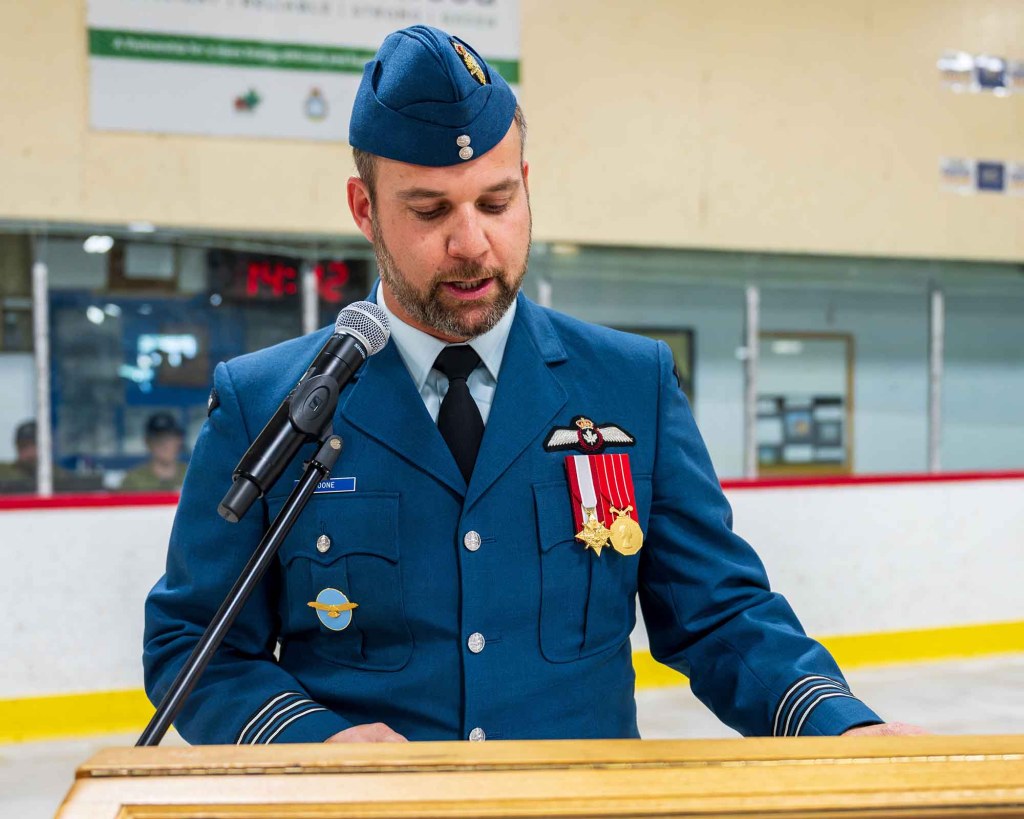
413 Squadron Lieutenant-Colonel Greg Boone said the importance of training and learning continues as members remember Tusker 914, and “honour the lives that continue to shape our squadron.
“The risk we accept is real. Across the squadron, we witness family, shaped through hardship and mutual trust. We look after family, and we look after Canadians.”
Squadron Chief Warrant Officer Bryce Culver said he was just finishing his search and rescue training 20 years ago, “and I don’t think I truly understood what had happened. I was eager to learn from those who’d gone before me.”
Tusker 914’s “sacrifice changed the way we train, build trust and communicate openly. We place greater emphasis on emergency equipment and procedures. We train for over-water work. We challenge each other to be safer. Those improvements were born from sacrifice.”
Culver also thanked search and rescue partners – the Canadian Coast Guard, the Canadian Coast Guard Auxiliary, vessels from neighbouring Canso and the community of Canso itself, and local first responders; “who all responded without hesitation.
“Their compassion and care reflect the best of Canada.”