Light pollution is artificial light that leaks into the air, causing brighter skies and excessive glare. This results in the night sky becoming brighter, which causes some serious issues to ourselves and the environment.
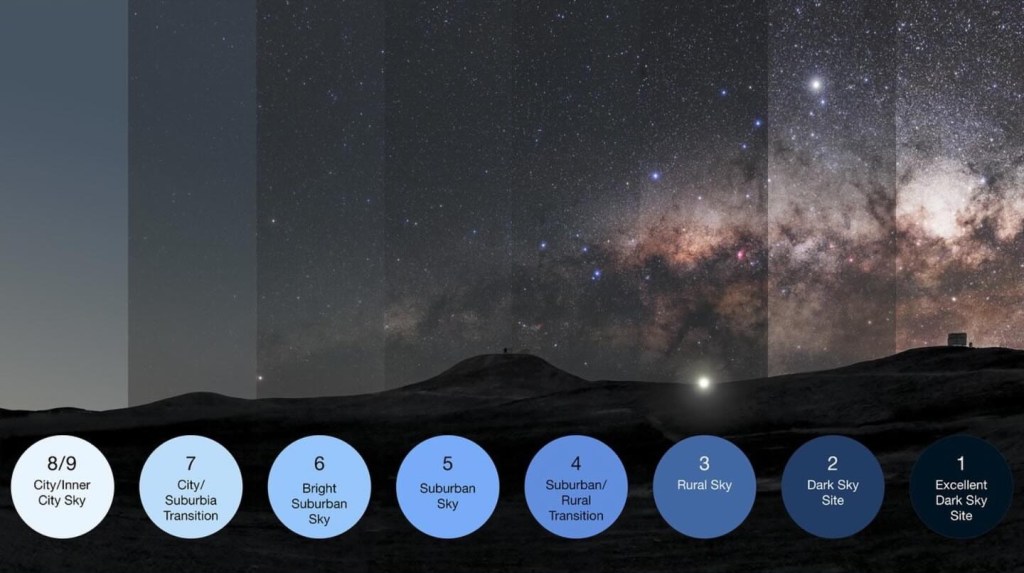
Currently in Greenwood, our sky Bortle level is a 5, which is very high for a rural area. For a village like Greenwood, we should be at a Bortle 4. This means we are dealing with problems that are more intense than they should be. Some of these problems include wasted energy, illnesses, broken migration patterns, dangerous glare and less visibility of our night sky.
Not doing anything costs more
If you have outdoor lights at your doors, shed or garage, you may be wasting 30 to 50 per cent of that light! This is a huge waste of light, money and energy, and adding more to light pollution. Depending on what type of bulb you use, you could be wasting 0.5 kilowatt hours (KWH) per night, which is 10 cents wasted! However, through a year, you could be wasting around $36! That small amount of money increases the more you wait to do something. Here is a chart of how much money and energy you waste over the years:
| 1 year | 5 years | 10 years | 20 years | 40 years |
| $36 | $182 | $365 | $730 | $1460 |
| 178KWH | 890KWH | 1780KWH | 3560KWH | 7120KWH |
Solutions
The best solution to reducing light pollution in your own backyard is by installing the right light fixtures outdoors. The first thing you need is actually less lights around your house. More lights actually make it harder to see your house. Next, install lights that point downward and are shielded. By having lights point down, you reduce glare, and the shield prevents light from going up into the air: it shines where needed, which makes that part of the house clear and brighter – and safer. Using less light uses less power – and costs less. All of these factors help reduce light pollution, and give you and your property more benefits. You can find good, inexpensive light fixtures for as little as $5 – just check if a light is “dark sky approved” by looking for this seal on the store package or website you’re buying from.
Ryker Sharp is a Grade 9 student at West Kings District High School. This article is a project he completed as a school assignment.


Step 1: Get cardboard, scissors, tape
Step 2: Cut a circle that is 10cm bigger than your light
Step 3: Cut a rectangle 9 cm tall and long enough to wrap around the circle
Step 4: tape the rectangle to the circle
Final: Cut a hole big enough to fit on your light shade
If you want the shield to make the light brighter, add aluminum foil on the inside.
Sources
- DarkSky / https://darksky.org/resources/what-is-light-pollut
- National Geographic Society / https://education.nationalgeographic.org/resource/light-pollution/
- Canada Under the Stars / https://astro-canada.ca/la_pollution_lumineuse-light_pollution-eng
- DarkSky / https://darksky.org/resources/guides-and-how-tos/lighting-principles/
- Volt Lighting / https://www.voltlighting.com/learn/using-dark-sky-approved-lighting-to-reduce-light-pollution?
- Access Fixtures / https://www.accessfixtures.com/how-light-shield-works/