Ticks are found across Nova Scotia, and some can transmit serious diseases. It is important for people to protect themselves, their family members and pets.
“We want Nova Scotians and visitors to enjoy the outdoors and all our province has to offer, while staying safe,” says Dr. Jennifer Cram, provincial medical officer of health. “That includes protecting yourself against ticks with insect repellents and doing regular tick checks after spending time outside.”
Ticks may often be found in areas with tall grass or shrubs, urban parks, gardens and forests. There are several kinds of ticks in Nova Scotia, including the blacklegged tick, which is known to transmit Lyme disease, anaplasmosis, babesiosis and the Powassan virus infection. Prompt removal of ticks reduces the risk of tick-borne disease.
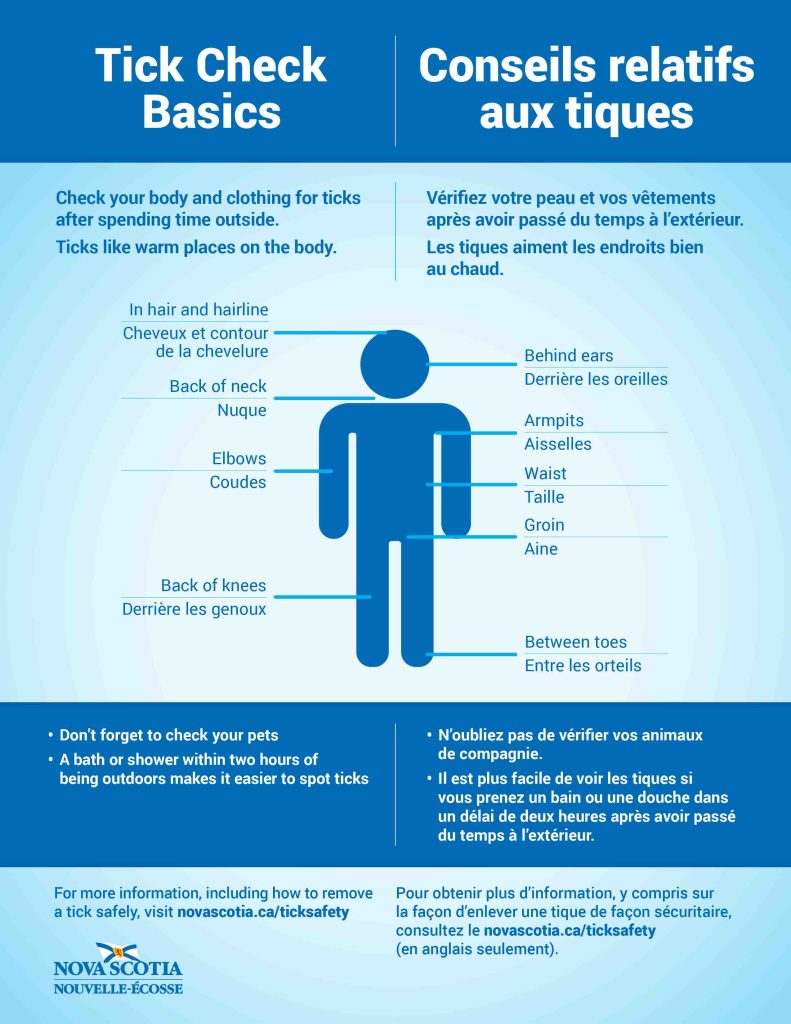
Ticks like warm places on the body, so it is important to do a thorough tick check after spending time outside, including around the ears, behind the knees, in the hair, between the legs and in the groin area and around the waist. Pets can bring ticks into the home; regular tick checks for pets is important, too.
People can reduce their risk by wearing long pants and long sleeves in areas likely to have ticks, wearing light-coloured clothing (light colours make it easier to see ticks), wearing enclosed shoes and tucking pants into socks, walking on well-travelled paths, avoiding long grass and vegetation; an applying insect repellents approved by Health Canada to exposed skin and clothes.
More information, including how to remove and dispose of ticks safely, is available at https://novascotia.ca/ticksafety/ People with questions about tick safety or tick-borne diseases may call 811 or visit the Nova Scotia Health Tick Service at https://www.nshealth.ca/clinics-programs-and-services/nova-scotia-health-tick-service Local pharmacists can assess tick bites and determine if a preventative antibiotic is needed. More information is at https://novascotia.ca/dhw/pharmacare/healthcare-services.asp