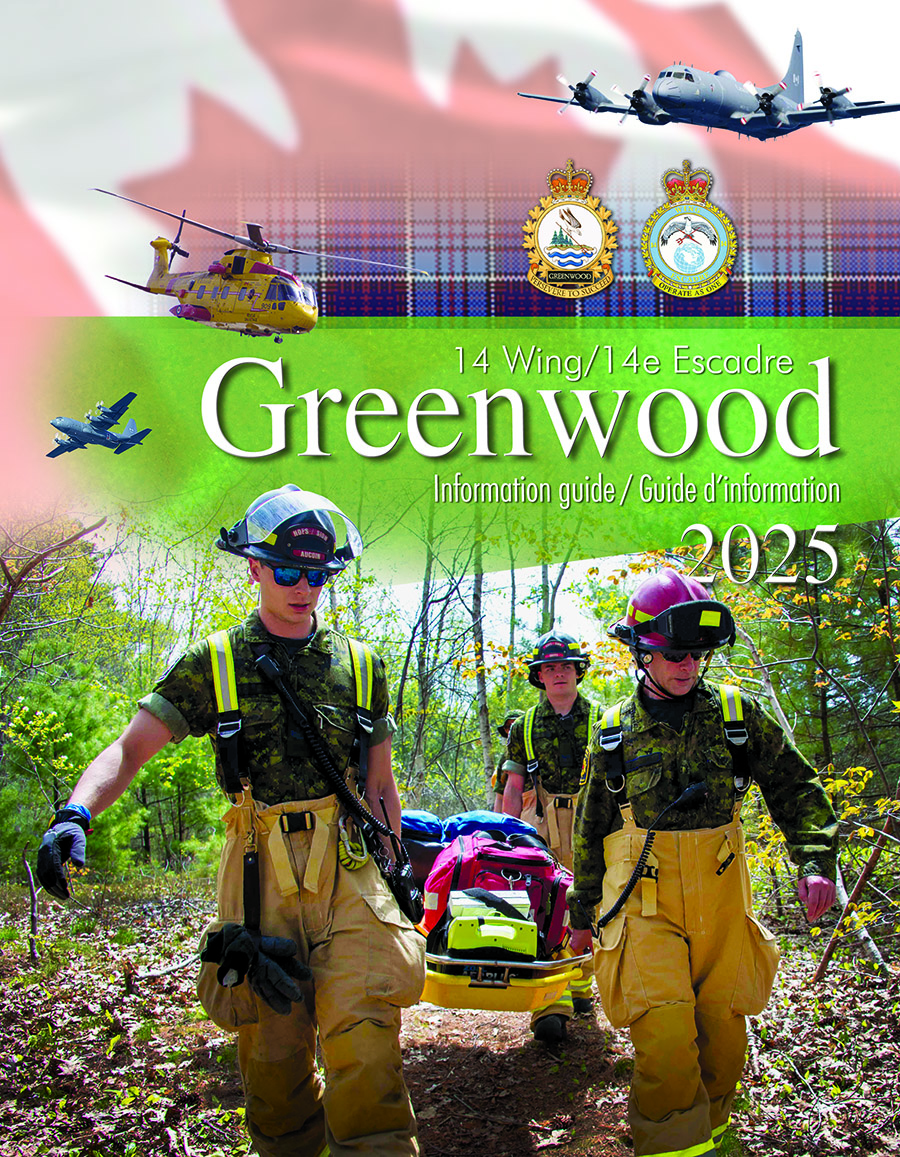
14 Wing Greenwood leadership and wider personnel all know the scale of change in the base’s immediate future – and some of it is happening now.
“The arrival of the Kingfisher 295, runway extension this summer, new hangars for the RPAS, new P8 aircraft – and hangars – by 2027, staffing levels; all fairly quickly, and all the infrastructure that comes with it,” said Colonel Luc Vachon April 14. “A lot of work needs to be done, and we need to be attuned to flight safety.
“Yes, the mission needs to happen, but it needs to happen safely and effectively at all times.”
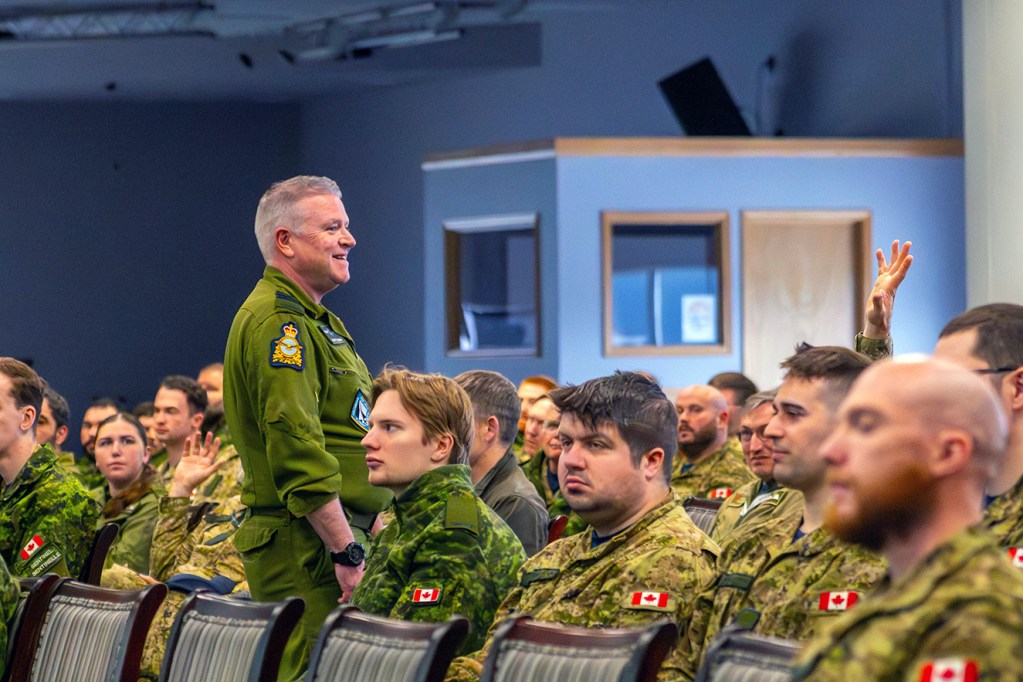
Vachon welcomed Director Flight Safety chief investigator Lieutenant-Colonel Scott Young and Chief Warrant Officer Sebastien Robichaud to 14 Wing ahead of their third flight safety briefing over a two-day visit April 13 and 14. Over 600 wing personnel took in the sessions, meant to reinforce the Royal Canadian Air Force’s commitment to flight safety, a just culture around reporting and reacting to incidents, and the importance of paying attention to the potential human, legal and financial impact of incidents.
“Lessons learned is one thing,” Young said, “but lessons identified comes first: we share information. How do we get to a combat capable force? We prevent accidental losses. It’s our job – across the board – to make sure that doesn’t happen.”
DFS takes annual and longer-term data, research and investigation results in its presentation to military and civilian Defence Team personnel across Canada in that effort to share information. Flight safety depends on the collective work of technical review, the airworthiness investigative authority and the airworthiness operators.
“That’s you – the doers,” Young said. “We all look out for one another: from a flight safety perspective, if you see something, you say something.”
Well-known factors are often found in flight safety investigations: personnel fatigue, short-staffing, lack of supervision, haste, incorrect parts and equipment, not following procedure, inexperience, distraction, increasing paperwork, communication. Unintentional mistakes from any of those, singly or in combination, are opportunities to learn – and address problems before they happen again. The reporting process around those are enabled by the RCAF’s “just culture” environment. An investigation happens outside the chain of command, looking just for contributing factors – and solutions.
“We need to control the pressures,” said Robichaud, “the many steps to block accidents.
“Know your job. Follow procedures. If there are cracks or holes, that’s when things slide through.”
Robichaud also reminded Greenwood attendees “we get complacent when things are going well.”
Robichaud, and Young, shared a half-dozen examples of more recent flight safety investigations, some closed but some still open, as examples Greenwood members could look at and “compare it with what you do.” Towing, equipment jacks and maintenance stand incidents; runway incursions, distraction and interrupted work – “easy tasks,” said Young, “procedure – and we’re not 100 per cent attentive. Slow down. Don’t take risks to be fast.”