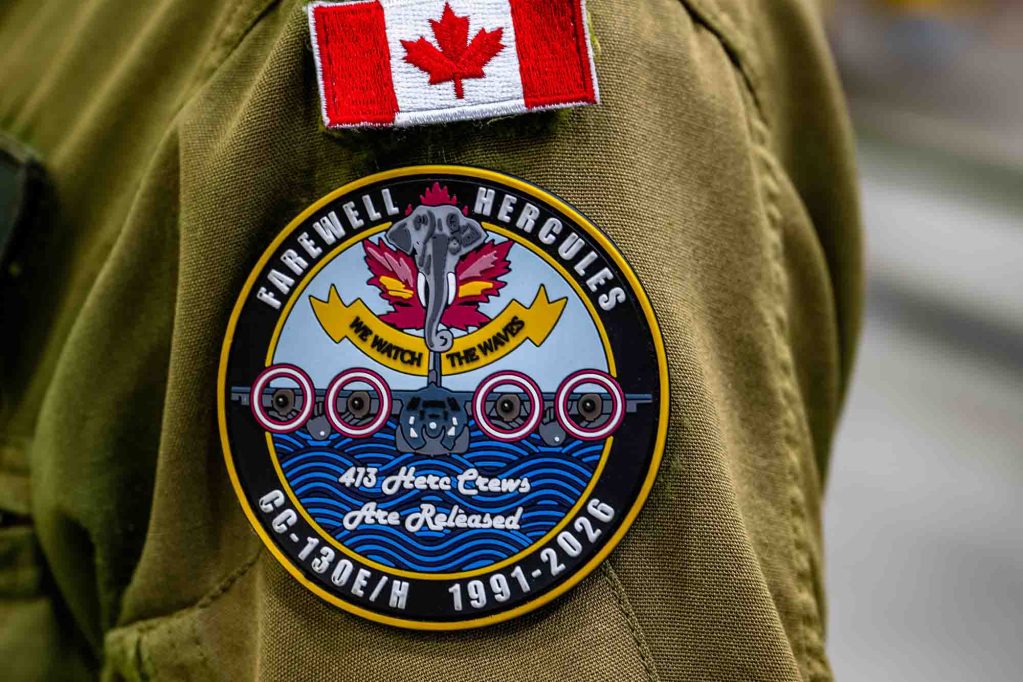
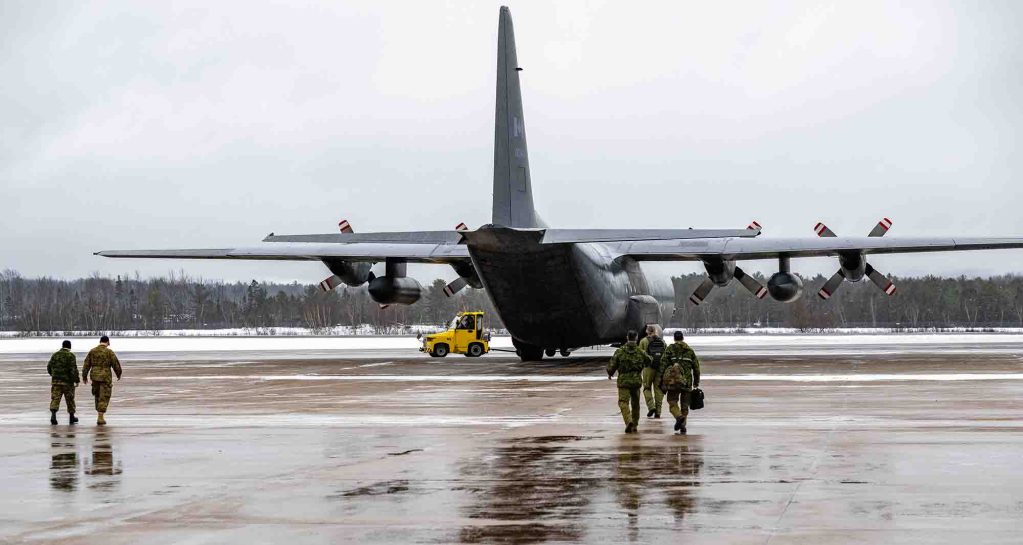
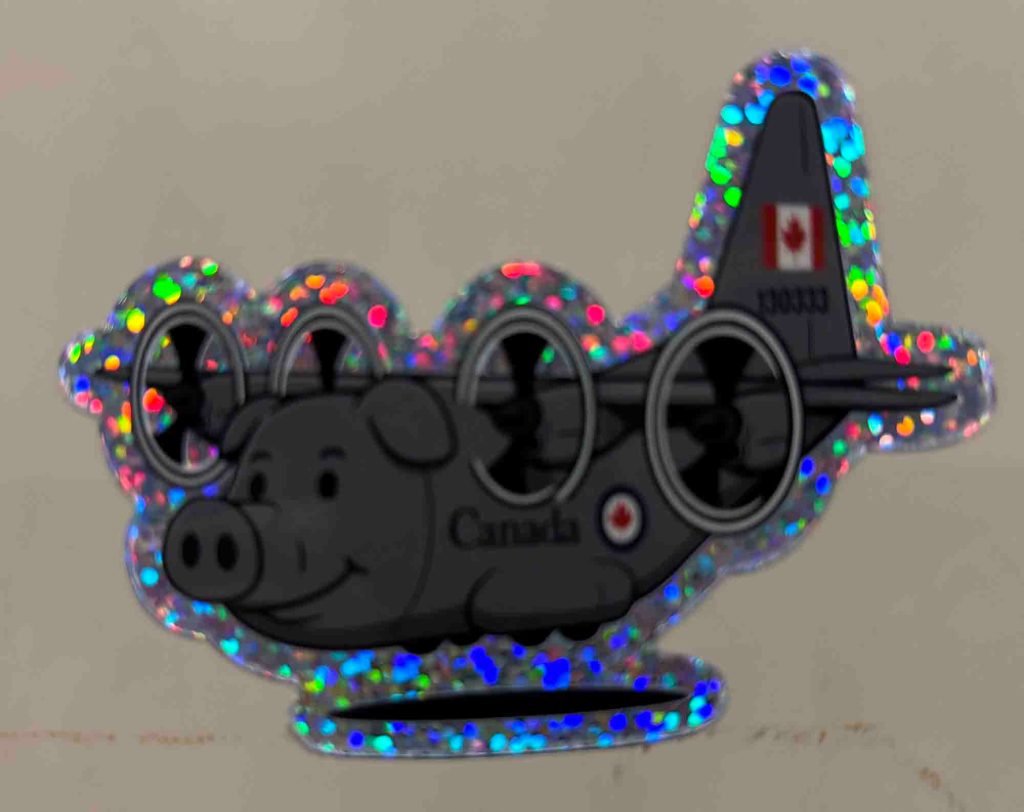
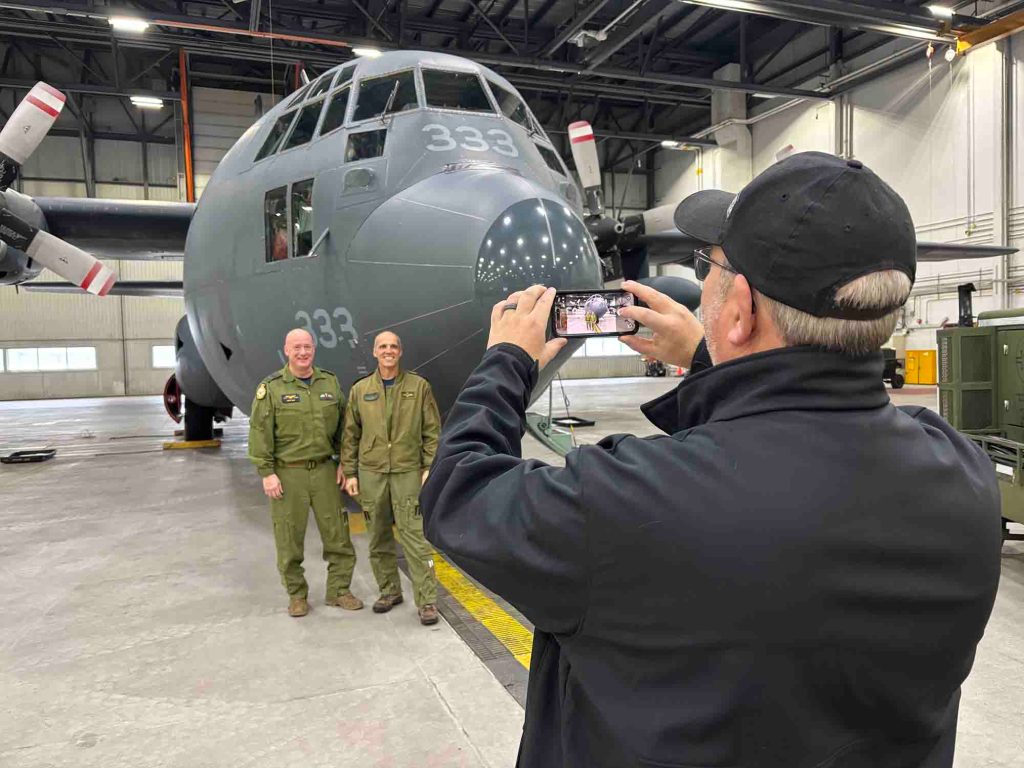
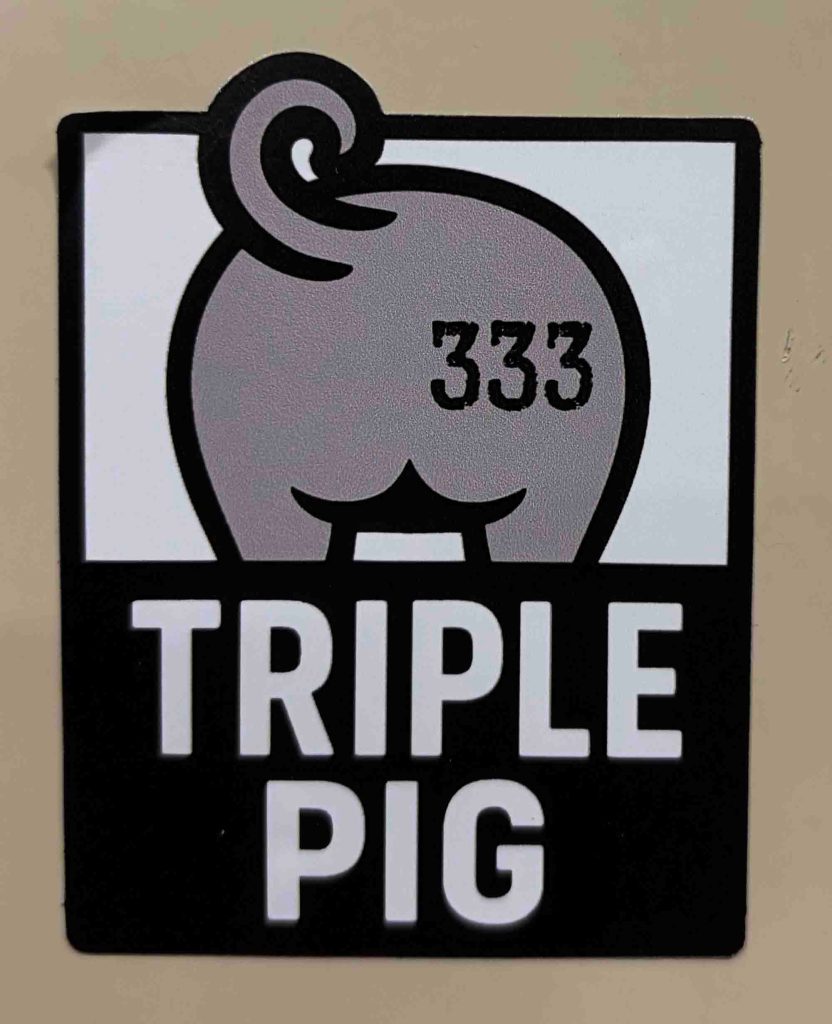
Exercising its “personality” and living up, perhaps, to its nickname, CC130 Hercules 333 – “Triple Pig” – decided not to leave 14 Wing Greenwood quite yet.
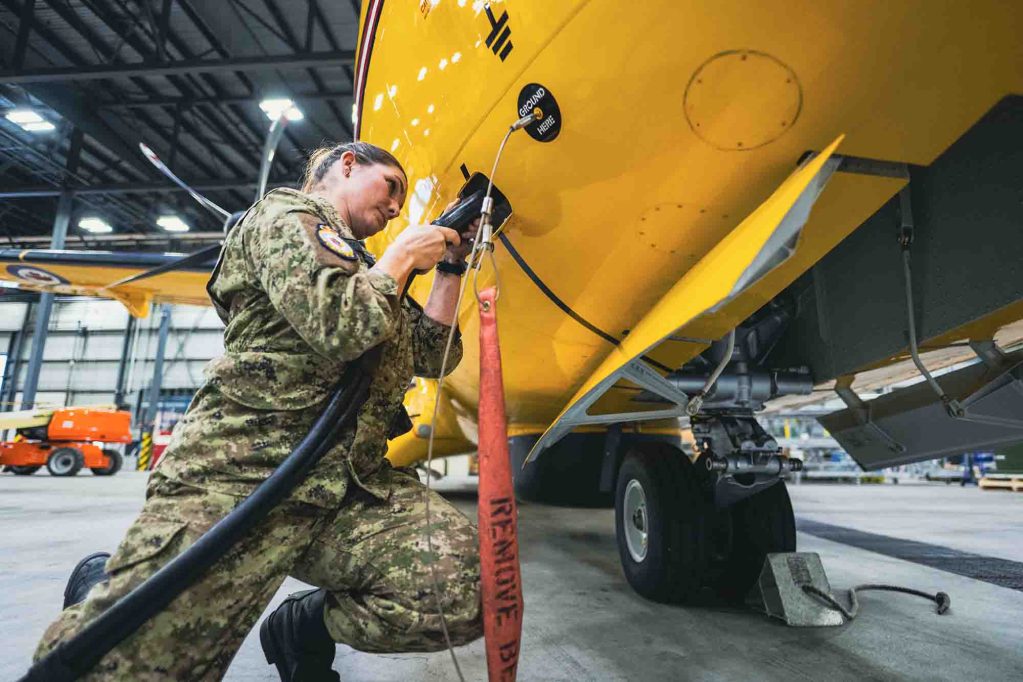
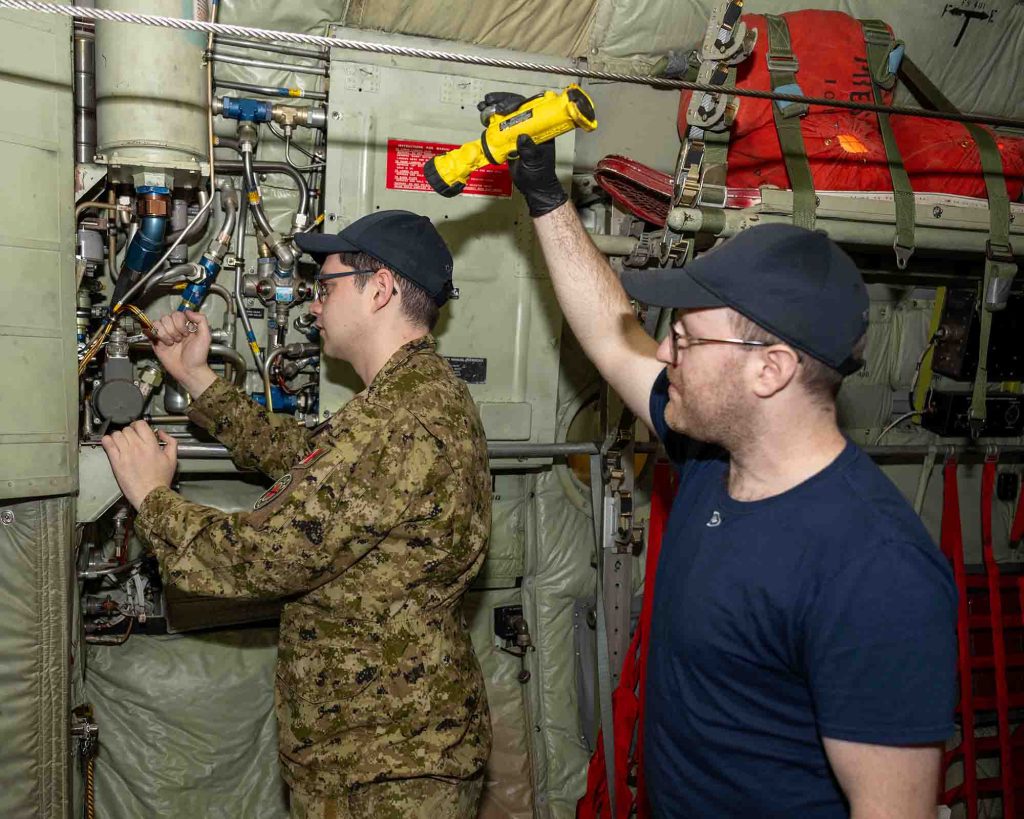
January 21, the last of the H-model Hercs in 413 (Transport and Rescue) Squadron’s 14 Hangar sat plugged in, powered off and waiting for the care of its ground technicians.
“It’s the way it goes,” says Captain Ethan Williams. “It’s a 50-year-old aircraft – they all have their ‘personality.’ This one? The ramp and door would take a lot of ‘persuasion’ to get it up and locked. 333 has about 37,000 flying hours, roughly. It’s been to Afghanistan when the CAF was there. It’s been through hurricanes to effect rescues.”
Major Wayne Sippola, the Royal Canadian Air Force Herc fleet’s chief check pilot, took a moment to pat Triple Pig’s nose, admitting he made an extra effort to be in Greenwood for 333’s departure flight.
“I trained on a Herc in 1995, and then was back on it for 24 years. This plane in particular – it’s been in Winnipeg, Trenton, Greenwood. It’s kind of famous; it’s had a hard life,” he said, detailing a 1980s’ low altitude parachute extraction incident, the loss of an exterior aluminum wing strip landing into Thule, Greenland; and, just last year, a broken ramp door jack inflicting a “significant” repair.
“She may fly a little crooked and be a little bent, but she gets us home.”
‘Iconic’ opportunity: Herc to Kingfisher
Williams grew up watching 424 (Transport and Rescue) Squadron’s Hercules come into CFB Trenton.
“I’ve wanted to fly them since I was 12 or 13. I have a die cast model – the propellers spin, and I still play with mine at home.”
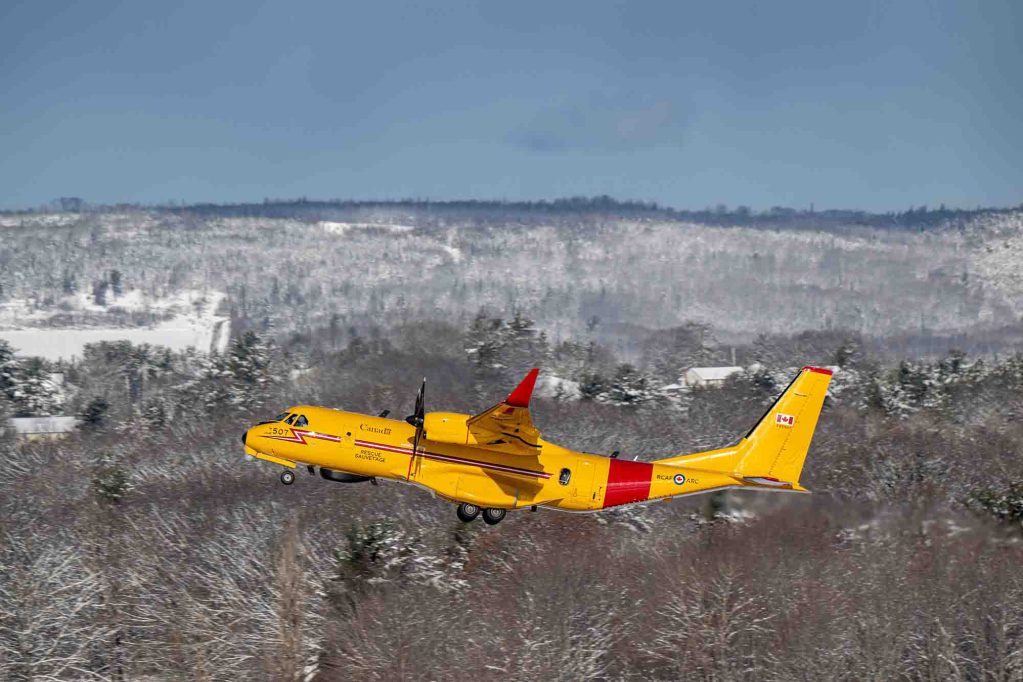
Williams has had about a year now flying the Hercules, and is ready to move into full operations with the replacement fixed-wing CC295 Kingfisher.
“We got our first Kingfisher last summer, and we started day training: warming the crews up, just going out to learn and explore. Not on the hook for anything, but just, ‘go perform.’
The squadron’s flight crew, maintenance technicians and search-and-rescue technicians have all been rotating through Kingfisher qualifications courses at 19 Wing Comox over the past year – a complex puzzle to schedule, as 413 Squadron continued day-to-day East Coast SAR responsibilities. The last personnel are on course now, and 413 Squadron actually responded to its first operational SAR in December, flying the Kingfisher as top cover on a call in Iqaluit.
Hercs 343 and 344 left Greenwood in the last month for Abbotsford. Williams says the iconic Herc 333 ended up as the squadron’s last Herc through paperwork and maintenance management, but “it worked out, keeping this one ‘til last. 333 has been the longest one here – three decades, and the universe works in different ways.”
His Kingfisher training and flying experience, so far, has been “amazing.” Crews appreciate some of the “surprisingly similar” knobs and buttons, carrying over a lot of reflex use from their years on the Herc – including windshield wiper buttons. They also love the four touchscreen computers, the search capabilities of the new cameras, the ability to key in a target location and use technology – instead of traditional smokes and ribbons – to calculate wind and speed factors and get within 50 feet of that target with a drop.
‘Kingfisher will grow’ on SAR-Techs
Sergeant Sheldon Roy acknowledges the Kingfisher pilots may also appreciate the responsiveness of the Kingfisher to pick up speed, but the search and rescue technicians in the new aircraft’s rear workspace feel like they’ve moved from “a school bus to a Porsche.
“If they pin it up front, we feel it in the back. The Herc, a jump day – we’d have 30 of us on it and off we go. The Kingfisher, we’re limited to five or six of us. The Herc – some of the Arctic trips we’ve had, with an awesome capability…. Flying nine hours to Iceland – dull and dark in the back of a Herc, but I can string up my hammock and nap or read in the back.
“The Kingfisher will grow on me.”
Roy’s highlight so far: the windows down the length of the Kingfisher: “I can stare out them for hours – the Northern lights I’ve seen have been phenomenal.”
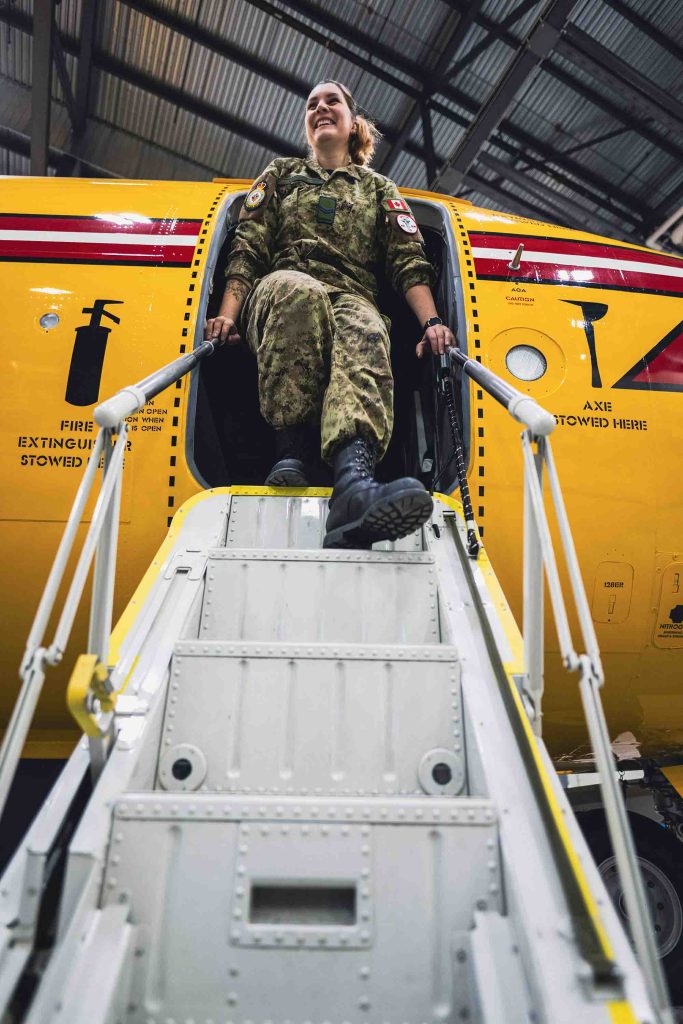
The SAR-Techs aren’t so much concerned with the aircraft they’re on, with their mission focused on what’s happening below on the ice, mountains, land, ship or water. In the past year, they’ve maintained – and added – currencies on the CH149 Cormorant, the Herc and the Kingfisher; just to be able to drop equipment, hoist or jump from any of them.
Fixed-wing flight engineers finding their way
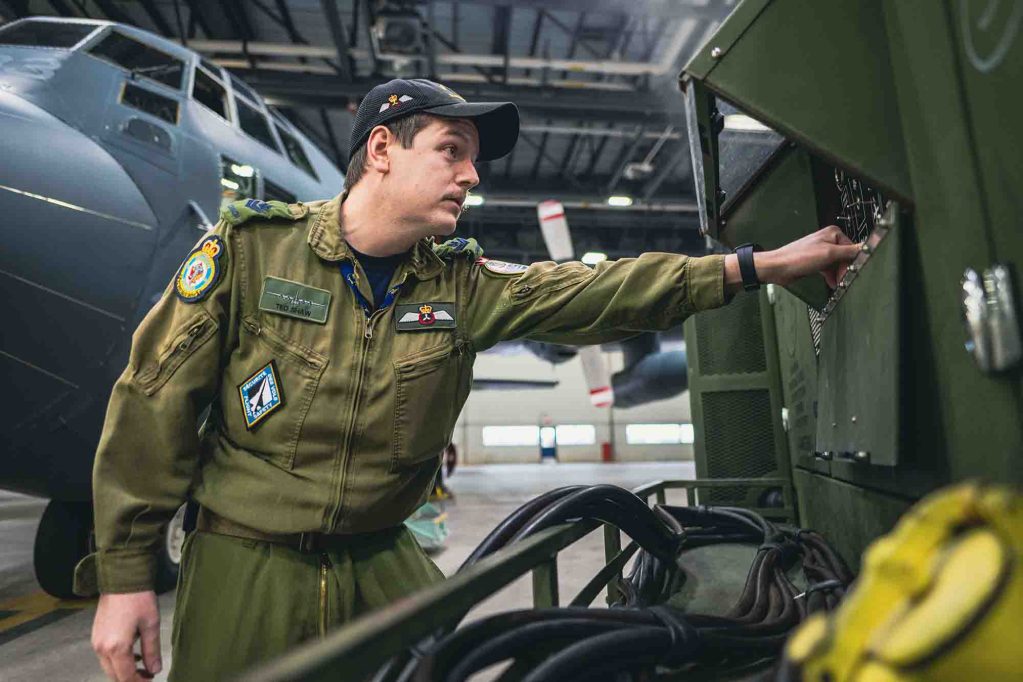
Master Corporal Ted Shaw is preparing for his own departure from the Hercules. Originally an aviation system technician on the Hercules, he expects, if he checked 333’s service logs, he could find his signature on its past parts work. He then earned his flight engineer wings, becoming the Herc’s human “computer” to oversee all the cockpit’s overhead instrumentation and backing up the pilots. Now, there is no flight engineer position on the Kingfisher.
“I knew the Herc didn’t have long left, and I really wanted to fly it – and it’s been a really cool experience. It’s bittersweet.”
Shaw has the opportunity to now move in the next few months into the CP140 Aurora world, where his flight engineer’s puzzle-solving skills will continue to be put to use. He expects to see his own career continue to evolve, as the Aurora will be replaced in coming years by the P8.
“The changes are amazing. It won’t be the big grey plane (the Herc) leaving trails of smoke, way overbuilt, so much so we can shake a lot of things off and still accomplish a mission – with everything and two kitchen sinks in the back. The Kingfisher is already proving itself with its kit, and we have to be thinking differently. And, the Aurora will be fun. Flight engineers have corporate knowledge and valuable skills, and it will be good as we transition from the Herc to retain that with the similar systems in the Aurora.
“I love my job.”