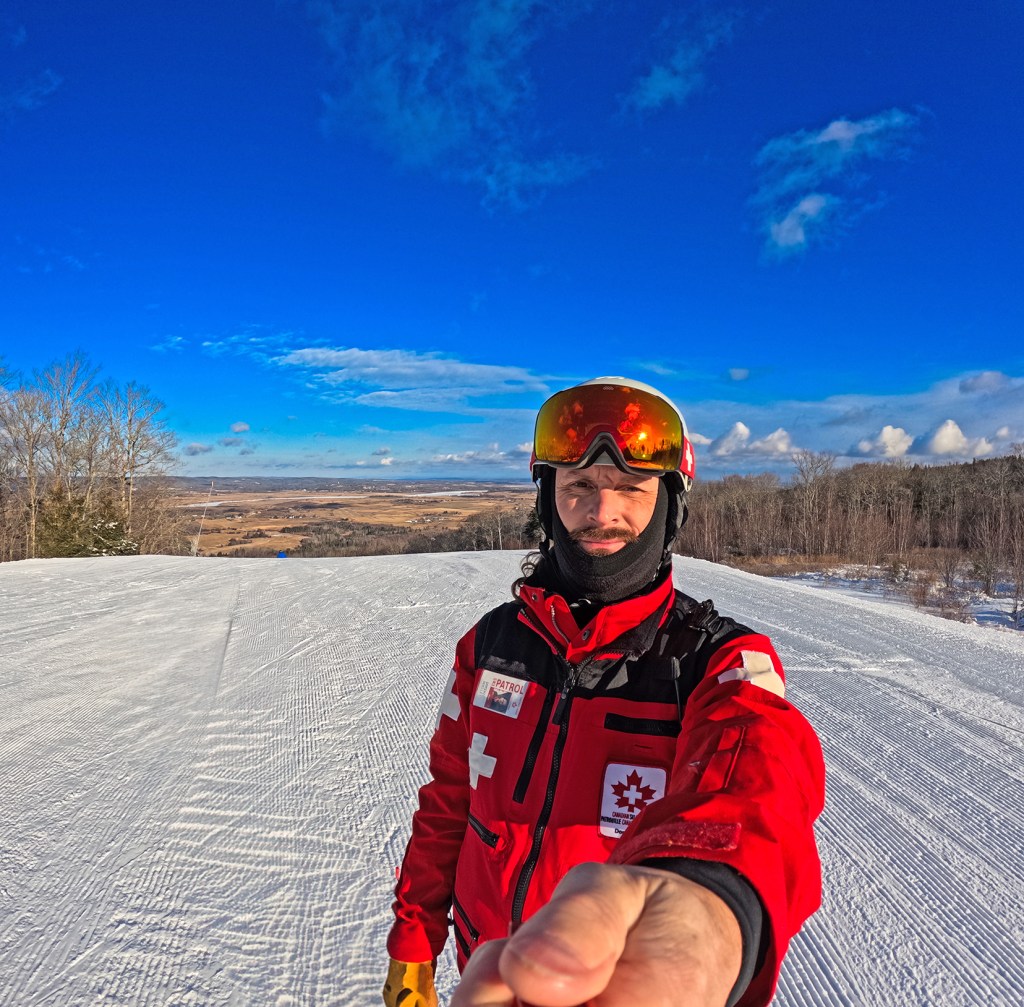
Sergeant Dominic Ouellet is back on the slopes, snowboarding his way through white powder and meeting all kinds of people who love life on the hill as much as he does.
But, it’s not all play: Ouellet is volunteer Canadian Ski Patrol member, spending every winter Friday at Ski Martock, just outside Windsor, providing volunteer first aid when someone’s adventure takes a turn.
Ouellet is an image technician at 14 Wing Greenwood. The Canadian Forces Leave Policy Manual, Section 5.3 Special Leave (Community Affairs), grants time away from military work for members who play an “integral part in the development of the communities in which CF members live through involvement in local organizations or events and, in so doing, reflect positively on the image of the CF.”
At 19, Ouellet says he wasn’t a skier or snowboarder, but he bought himself a board when he started working and headed to Mont Bélu in Saguenay, Quebec.
“I tried it; I loved it – fell in love with snowboarding,” he says. Joining the ski patrol meant there was always a reason to head to the hills, without having wait on friends’ schedules.
“I could be skiing alone, but I’m always part of a team. There are always people there.”
In 2005, at 27, Ouellet joined the Canadian Army as a vehicle technician. His postings took him through the “Ontario tour,” but he always found ski hills nearby to maintain his volunteer ski patrol involvement. In 2022, posted to 14 Wing as an image technician, he arrived too late to take the late summer re-certification training. He sat out 2023, but is now back at it.
“Martock is a good, intermediate ski hill – enough for everybody, and high enough to be a challenge. It’s a hill with not a lot of super beginners: a lot there know how to ski, or, if you’re new, you’re going to take a lesson. I’m there weekdays, Fridays, for the first chair of the morning – and I always see the same people, the regulars. And we have the school trips.”
Ouellet says the ski patrol’s advanced first aid training includes all of the basics he has a member of the Canadian Armed Forces, but its’ 60 hours adds in on-snow first aid, including oxygen and transport care, and accident site management training; as well as safety education. Patrollers re-certify their first-aid qualifications every year. He carries a radio, a vest with all his equipment – and his snowboard.
“There may be a lot of sprains of knees and ankles for skiers; snowboarders, it’s their wrists. And general bruising and banging,” Ouellet says. There may be a couple instances every weekend when ski patrollers pack someone up on the hill in their red two sled, “but it’s mostly a precaution to get them down safely and confidently.
“Most of our job is not first aid-related: there are lost kids, or a kid that gets scared; someone falls and is not feeling confident to continue. We watch for unsafe behaviour and call for security, or maybe we just talk to people about the Alpine code of conduct.
“We’re wearing all red, people see us and talk to us, and we can give them information on the hill and conditions and act as ambassadors for the hill. I meet a lot of people.”
While he wishes unlimited beavertails came with the job, he’s pretty happy with the benefits of his volunteer commitment:
“I’m the first chair and the last chair of the day; ski patrollers are the first and last people on the fresh, snowy hill.”