Reservists, civilian workplaces make a field connection
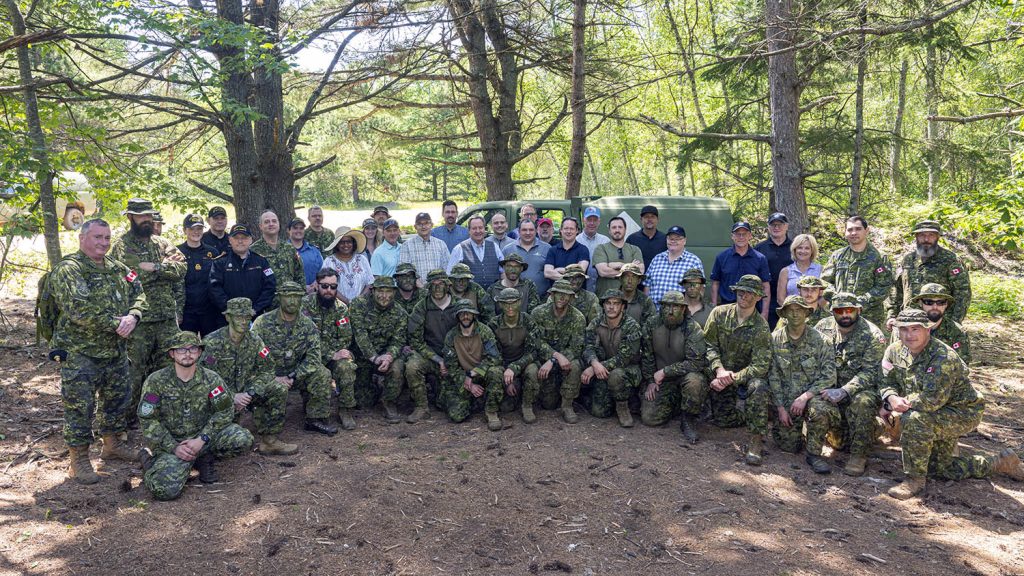
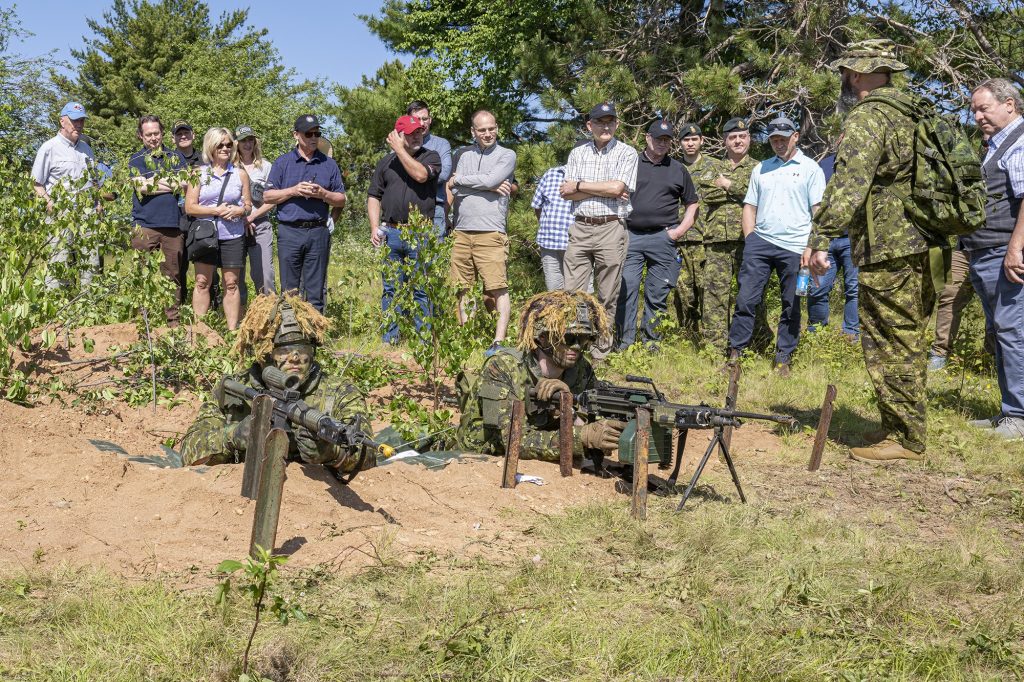
June 23, 5th Canadian Division Training Centre’s Delta Company (D Coy) hosted an ExecuTrek event at 5th CDSB Detachment Aldershot for 18 Atlantic Canadian business leaders.
The Canadian Forces Liaison Council’s (CFLC) ExecuTrek program shows civilian employers the benefits military training provides. In addition to incentivizing their potential hiring of Reservist members, ExecuTrek provides an overview of work and leadership skills Reservists learn as they take leave from their civilian workplaces to undergo military training.
D Coy’s Officer Commanding Major Adam Veyt said the training provided at Camp Aldershot may seem very different from civilian teachings, but many of the skills students develop are transferrable to their weekday jobs.
“The focus of what we do here – and we’re really good at it – are leadership courses.”
Military leadership skills, time and resource management, administration, planning, communication and many other competencies are often what civilian companies look for in an employee. With high performance standards expected of students, Veyt said the learning environment plays a crucial role in the success of Canadian Armed Forces (CAF) training. Many Reservists join at an average age of 23, as they’ve completed post-secondary education. The military and life skills learned in the Reserves develops them beyond most young adults entering the work force.
“We take them out of their comfort zones so they can grow,” said Veyt. “We teach these skills through experience and exposure out of their comfort zone, turning it into a comfortable environment.”
The ExecuTrek team met with students on the field portion of their Rank Qualification – Master Corporal (RQ – MCpl) Course, the CAF’s primary leadership course. The group was in its sixth day in the field, working around the clock amidst ticks, heat and difficult terrain. Course instructor Sergeant Travis Jeffrey was proud to introduce his class – which hadn’t slept in the last two days.
“The students were excited to display what they’ve learned. They’re always highly motivated. They show up Friday nights after their week at a civilian job, they work all weekend, and are back on Monday.”
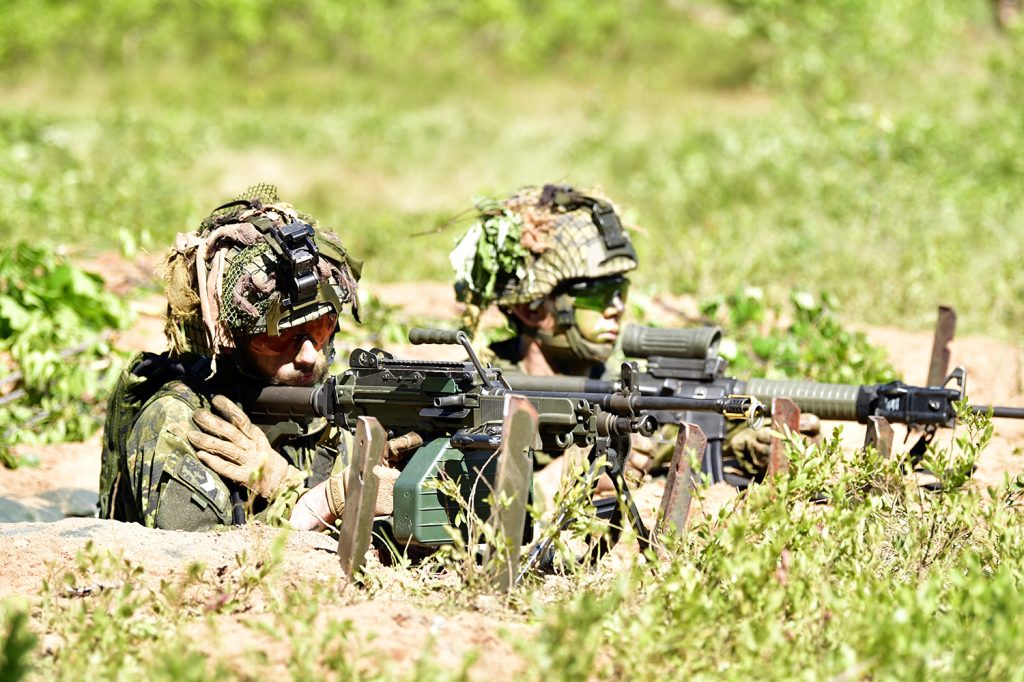
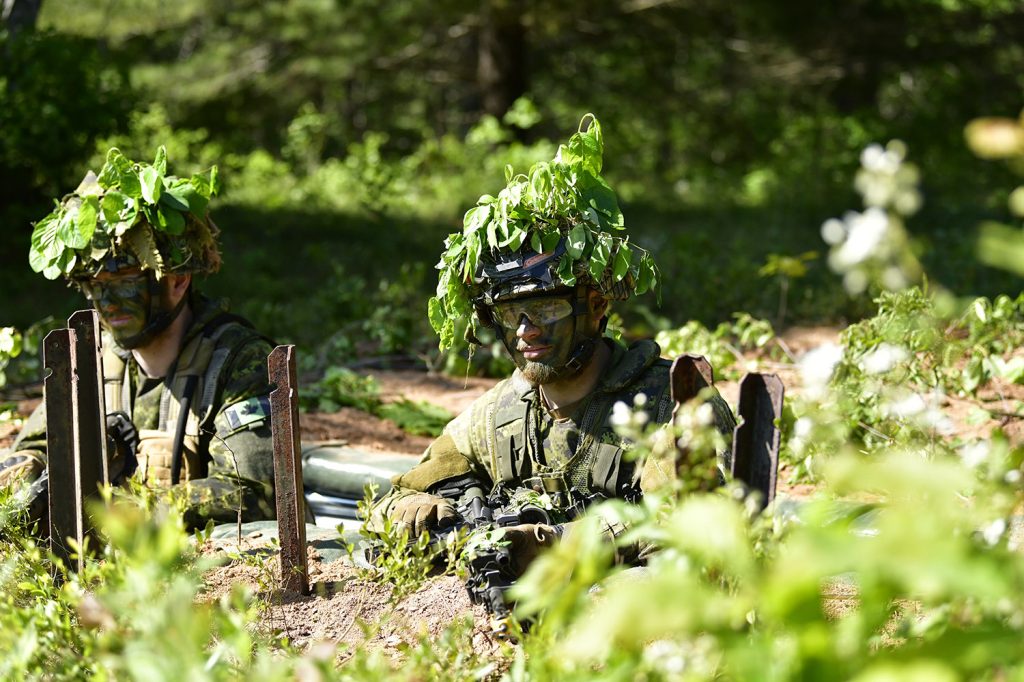
Lieutenant Barkhouse, platoon commander and course officer, explained to the group how the field activities provide students with the foundation of leadership training: digging trenches involves teamwork, planning skills and building resilience.
“Trenches are sited in mutual support of each other, so that everyone in the field can always support each other. We don’t work alone.”
Master Corporal Paul Storrier, one of the students manning the trenches, spoke on the importance of teamwork in his position.
“Camaraderie is vital: no one can win by themselves. There’s a dead hill below me. I can’t see. I was relying on [my teammate].” His colleague, Corporal Jared Peabody, agreed. “You have to be confident in the people around you. At the end of the day, you have 20 people around you with live explosives. You need that trust.”
The kind of trust and teamwork forged on courses like these isn’t built overnight, and experience comes from working together over long hours, in extreme conditions, to complete difficult tasks. Presenting the students, Veyt said “Students have been in their trenches for just over an hour. They’ve been developing their defensive positions for 32 hours. This is the resiliency piece of the training. When the enemy is coming, we stay up. We’re at 100 per cent stand to.”
When asked how participants communicate between trenches, Veyt joked, “A lot of yelling.”
In reality, effective communication on a battlefield is vital to mission success. Soldiers have limited visuals on their teammates and there’s often little time to communicate important information to multiple people in a loud and chaotic environment. Even with little rest, students need to be able to communicate with their leaders in a clear, concise and expeditious manner to succeed in a field operation.
“It’s called battlefield geometry,” Veyt said. “I can ‘see’ the ground through the radio. Students learn effective and reliable communication, as well as develop the ability to assess situations – even in high stress conditions.”
At the end of the exercise, the students are tired and hungry – but proud of what they’ve accomplished on the course.
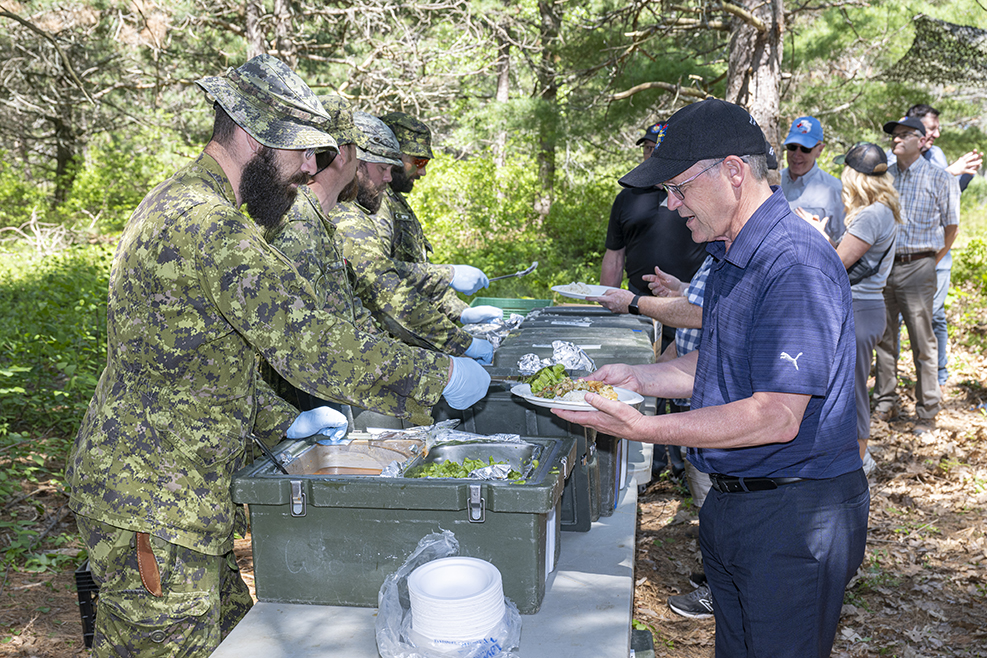
“It’s nice to be able to learn how to lead people, to have people choose to follow you and have the tools and skills to do so,” Peabody said, as the course members and the ExecuTrek visitors shared a hot haybox lunch.
“You only know how to be a leader through experience, which is why I appreciate them pushing me out of my comfort zone.”
Secretary for the Dartmouth General Hospital and co-president for the Health Association of African Canadians, Sharon Davis-Murdoch attended the ExecuTrek to gather information on how to improve the representation of people from different backgrounds within the CAF.
“What I wanted to know was, ‘what are the opportunities in the CAF for building and developing life skills?’ There’s an opportunity to provide a pathway, to make a connection between the skills required from individuals interested in joining the CAF, and the skills provided by the CAF.”
While outreach remains important to move people of African Ancestry into recruitment so they can access CAF opportunities, Davis-Murdoch sees an additional communicated interest in recruiting: “There’s a general sense that people are interested in becoming more diverse in the CAF.”
Veyt echoes her sentiments.
“We really do believe in inclusivity and diversity. When you’re a leader with a diverse team, you can accomplish more.”
Davis-Murdoch found the presentation very informative.
“I watch a lot of movies. It was useful to see the reality, a lot of hard work and patience. I admire the building of resilience and discipline. I think that’s very impressive. The opportunities are there in a flexible way through the Reserves, which could be attractive.”
Whether it was leadership skills, valuable information, new networking partners or a deeper appreciation for the role of the CAF’s Reserve forces in Canada, everyone left Aldershot’s ExecuTrek having gained something from the experience – including Veyt, presented the CFLC coin for his contributions to Reservist leadership training and the ExecuTrek initiative.

Bruce Holland, executive director for the Spryfield Business Commission, left the ExecuTrek looking forward to promoting the Reserve force to the 180 businesses the commission works with: “Some would be more than pleased to hire Reservists.”
Liz Rigney, a former Reserve force member and now executive producer for CTV Morning Live – CTV Atlantic: “For an employer, to see the skills you can use in an industry, seeing Reserve force employment on a resume – you’d be foolish not to hire a Reservist.”
Brian Carter, retired RCMP and now a policing consultant, found helpful insight on leadership training, which he hopes to bring back to the RCMP and other forces so they may also benefit from the CAF’s approach to building leadership abilities in their members: “When you see something that works, you say, ‘let’s go with that.’”
Robert Summerby-Murray, president of Saint Mary’s University, hoped he will be able to make university systems more accommodating and flexible to currently enrolled military members. Four years ago, he hosted a reception for Reserve force students attending St. Mary’s. When 80 people attended, including Regular force members, he thought, “what could post-secondary institutions be doing to move people through programs and into the military and RCMP,” rather than simply into post-secondary programs after they have served?