East Moor Memorial is an annual event that honours the veterans of 415, 429 and 432 squadrons, who served during the Second World War at Royal Air Force (RAF) Station East Moor, Yorkshire, England. The memorial takes place in Sutton-on-the-Forest, a small village adjacent to the former airfield that once was the home to nearly 1,800 Royal Canadian Air Force (RCAF) and RAF personnel.
May 13, 415 and 429 squadrons came together once again to commemorate their squadrons’ contribution to Bomber Command and the Second World War Allied effort. This year’s service, on a warm, sunny day, followed the coronation weekend of His Majesty, King Charles.
Current members of 415 (Long Range Patrol Force Development) Squadron, Major Mike MacSween and Sergeant Nathan Crosby, and 429 Squadron, Sergeant Reese Paton and Corporal Mathieu Lavoie, met at London Heathrow and drove north to York. They met up with a former CO 415 Squadron commanding officer, Lieutenant-Colonel Patrick Leblanc, and a former 415 Squadron squadron warrant officer, Master Warrant Officer Jason Patterson. Both former members took the opportunity to conduct personal travel to attend this year’s service.
Events kicked off May 11, meeting with host Flight Lieutenant Alan Dolding and making a lunch visit to RAF Leeming. The group visited with Station Commander Group Captain Gareth Prendergast and conducted a tour of the base, which 429 Squadron occupied after East Moor. The group then travelled to the Commonwealth War Grave site in Harrogate (Stonefall Cemetery), where 988 Second World War airmen are buried. This beautiful site is the resting place of over 600 Canadians; including members of both 415 and 429 squadrons. The visit became a highly emotional reflection of the sacrifices made by so many young aviators, and the site’s beauty is a stunning tribute to those who lie at rest. The Stonefall visit was recommended by 415 Association president Chris Henneberry, who spoke of a collision of two Halifax Bombers August 21, 1944, which took the lives of 12 aircrew and two ground crew, including the pilot and CO 415 Squadron Wing Commander John Gordon McNeill, DFC. The other aircraft was flown by Squadron Leader Brian Edmund Wilmot, DFC and Bar, who sadly was killed before he was able to receive a Bar to his DFC. After a period of searching, we were able to locate the victims of this crash and pay our respects.
The group proceeded a local establishment in York, the Golden Fleece, marked as the most haunted pub in York: a Canadian airman died in the former hotel, and is thought to have taken up residence as a long-term, non-paying guest. We also met a local resident and former RAF pilot, before a lengthy career in commercial aviation; and discovered a mutual colleague – who was, in fact, our host for the memorial service, Dolding. Was it pure coincidence that we entered this specific establishment, or was it fate?
May 12 consisted of a tour and lunch at the large historic house in Sutton Park, which had served as an officer’s mess and residence for Canadian aircrew that operated from East Moor. The home is currently owned by the Sheffield family, and Robert Sheffield graciously hosted the group. Following lunch, the group proceeded to the Sutton-on-the-Forest elementary school to meet the students and discussed the reason for our visit. We presented them some souvenirs and then proceeded to the former RAF East Moor airfield, which still has a few buildings and runway from its former glory days.
May 13, some of our members visited Betty’s Tea Room in York, formally known as Betty’s Bar. This was a popular place for socializing during the Second World War. Over 600 airmen engraved their names in mirrors inside; many never returned after being killed on missions. The Tea Room remains a popular spot for locals, and retains its historical importance to the Second World War.
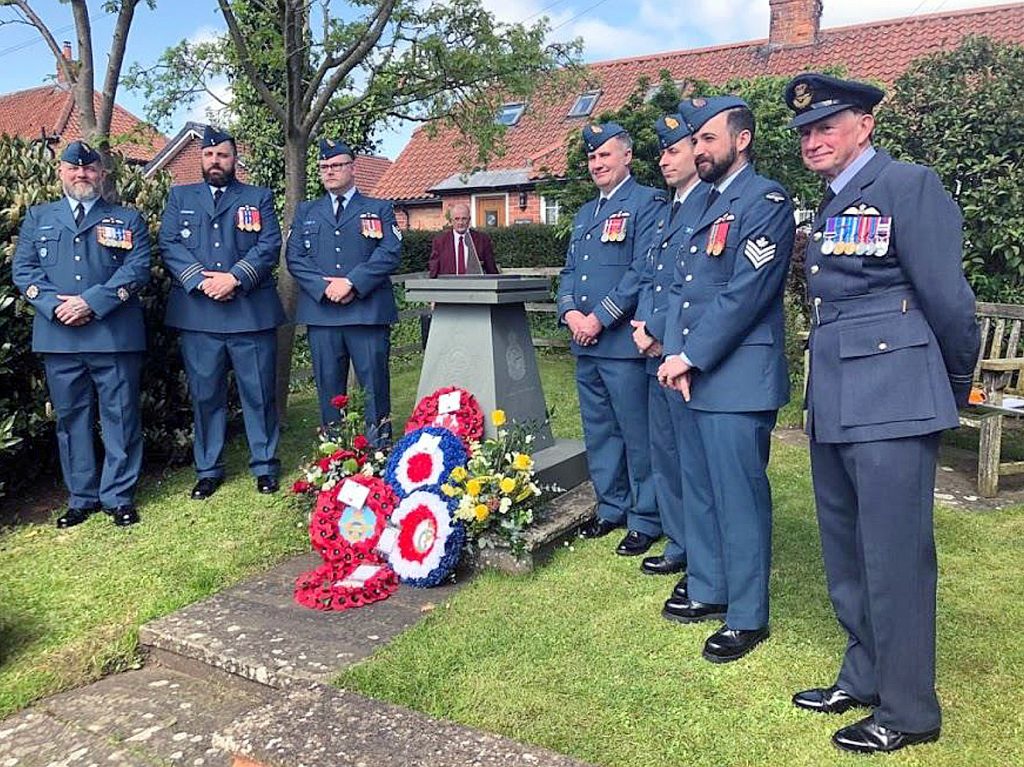
The afternoon consisted of lunch at Miss Daisy’s Tea Room in Sutton-on-the-Forest before the memorial service. At the memorial, several veterans, council members and citizens attended, surrounding the small sundial monument that serves as a tribute to 415, 429 and 432 squadrons. An address was given by MacSween to commence the service, while prayers, the Act of Remembrance, the Last Post, Reveille,and laying of wreaths and flowers followed. Closing remarks were given by Sheffield before the playing of both national anthems.
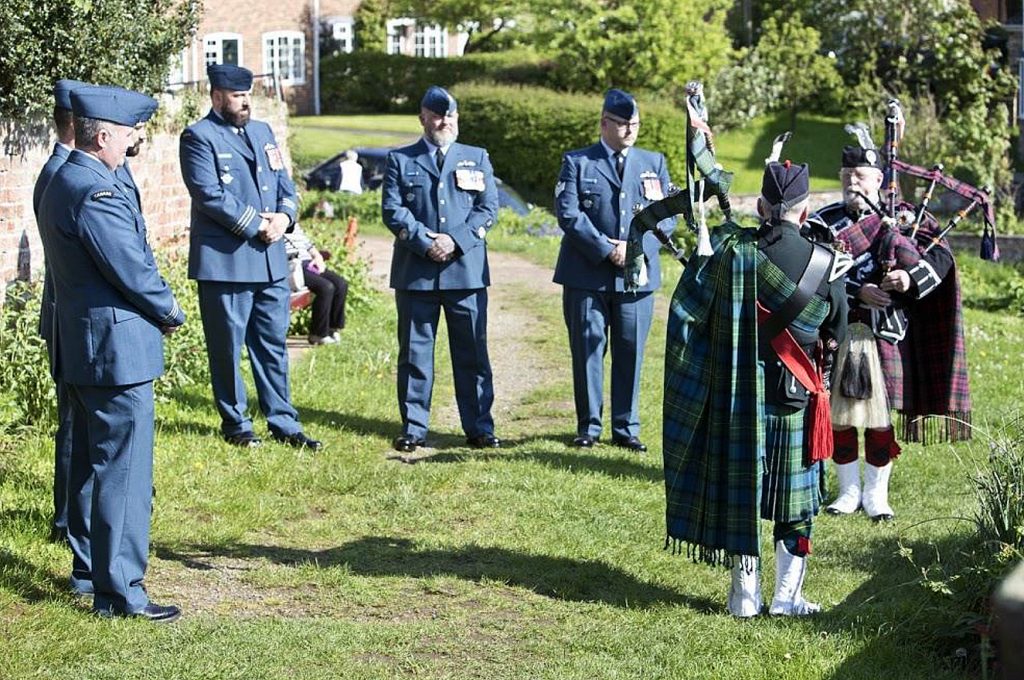
Following the service, people gathered across the road at the Grey Village Hall for afternoon tea. Lead piper Jim Sharpe offered to take the group to the nearby town of Brafferton to visit a memorial of a crash site of a Halifax Bomber. Pipers played a few tunes while the group reflected on the historical importance of the site. The group met with parish council member Roger Clements and photographer Simon Penson. Penson recommended visiting the nearby town of Tholthorpe, where a Canadian monument exists, and later provided pictures he took during the visit to Brafferton.
The quick detour to Tholthorpe proved not to disappoint. The small memorial in the centre of the village pays tribute to RCAF squadrons 420, 425, 431 and 434. A small plaque under a maple tree states, “In Memory of a father never known, F/Sgt Willaim Brown Gracie of Peterborough, Ontario, killed in action 5 Aug 1944.” A beautiful tribute to the many Canadians that never returned home.
While at Tholthorpe, a local recommended visiting a nearby pub where photos and memorabilia of the RCAF squadrons still hang. He said the control tower of the former RAF Tholthorpe airfield was intact, now converted to a family home. The group felt like they were following a bouncing ball through history, and decided it was a fitting to make a surprise (unannounced) visit to the former control tower. Driving up to the residence, the group was met by current owners, Paul and Rosy Walker, who graciously opened their family home and pointed out historical features of the former airfield from the unobstructed view. A photo album displayed pictures of the wartime era, while a plaque on the outside of the home, set between red maples, displays honour to those RCAF squadrons who served there during the war.
The final day consisted of attending a church service at All Hallows Church in Sutton-on-the-Forest. All Hallows’ ceiling was painted to commemorate the RAF and RCAF members who gave their lives while based from East Moor. Leblanc and Lavoie conducted readings during the service.
To state that this year’s memorial was touching would be an understatement. We once again must send our gratitude to the parish members of Sutton-on-the-Forest, veterans and citizens who choose not to forget the sacrifices made by so many RCAF and Allied personnel. We would like to send our special gratitude once again to Dolding who, after many years of facilitating this memorial, may soon move into retirement. The RCAF squadrons and our associate members are truly thankful for his role over the last many years.
It is truly apparent RCAF history throughout small villages in Yorkshire is heartily alive, and local citizens remain committed to remembering the sacrifices made by so many. Their commitment to our history should be commended. Ad Metam.