Coast Guard visit on-the-ground opportunity to compare search, rescue work
Search and rescue responders meet many times under the worst conditions to do the best work possible. Canadian Coast Guard rescue training centre personnel travelled from Dartmouth to 14 Wing Greenwood January 24, making time to find out more about 413 (Transport and Rescue) Squadron’s personnel, assets and procedures.
“We deliver search and rescue training to the Coast Guard fleet from our own diverse backgrounds – small craft operations, rescue…,” said senior SAR program operator Peter Milhausen. “We work with 413 Squadron all the time – they do hoist exercises off us to get their people requalified, and it also helps us know what to expect: how to do a hoist, a medevac, the equipment involved, what an interaction will look like when they land on us….
“And the Hercules uses our vessels as targets to track, and line up on for dropping smokes.”
And, because the Coast Guard has vessels in and out of dozens of East coast ports, they sometimes have the opportunity to collect 413 Squadron gear from fishermen who may have needed it.
“In an emergency, we know we definitely want 413 to come help us. We do get feedback from fishermen and other boat operators, probably more than 413 Squadron does, because we’re in the community and people see us at the wharves.”
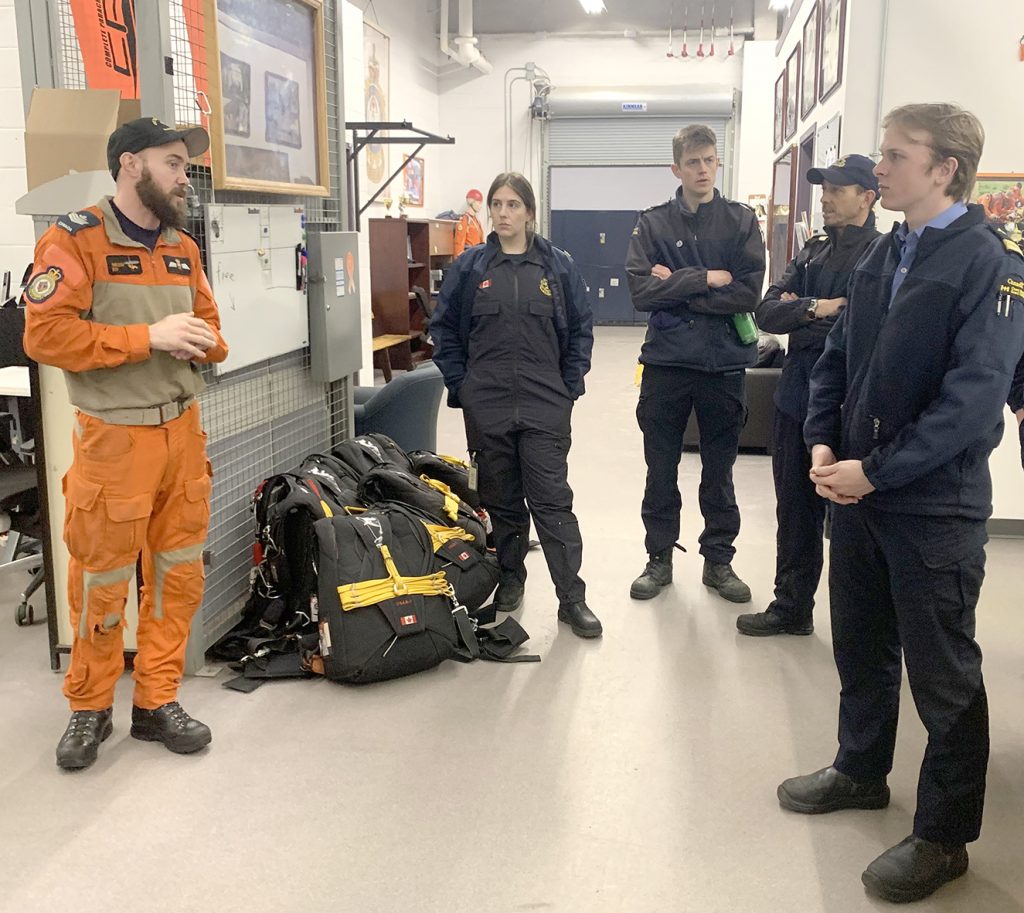
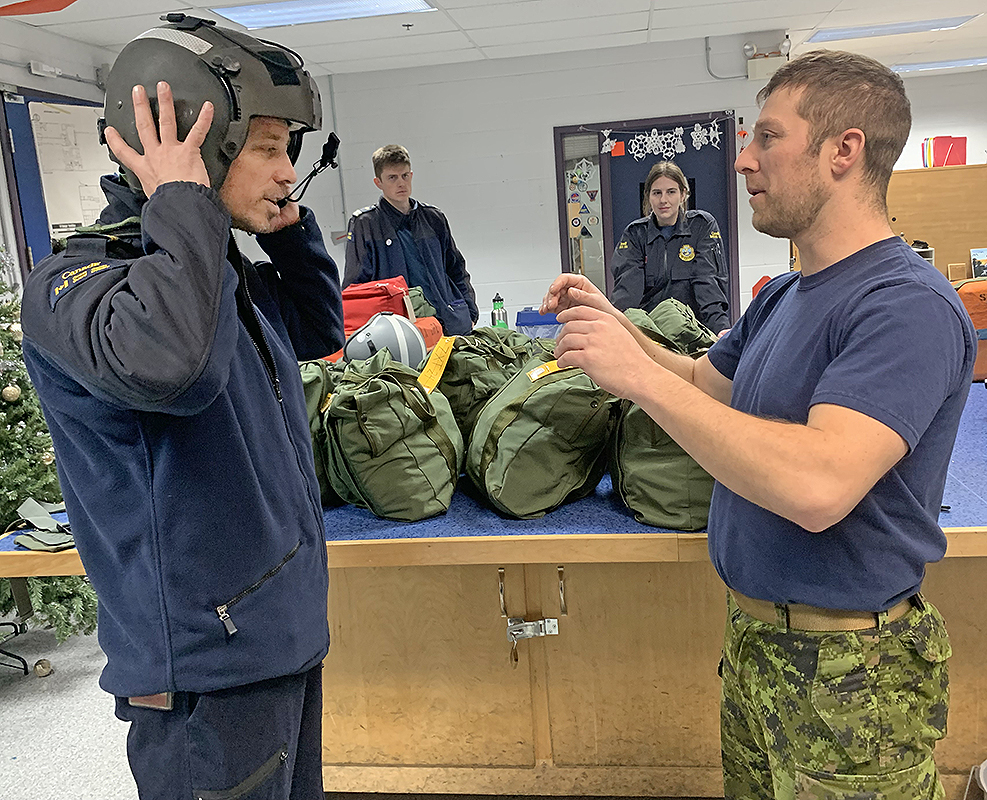
On today’s visit, search and rescue technician Sergeant Sheldon Roy toured the Coast Guard contingent through the SAR shop, pointing out the array of medical, climbing, diving, small boat, ATV – and more – equipment, and detailing the extensive calendar of qualifications the SAR-Techs must maintain.
“We’re always making sure everyone has what we need to keep flying, and do it safely,” Roy said. “Between maintaining the search and rescue currencies, plus the operational currencies on an aircraft, we track a lot!”
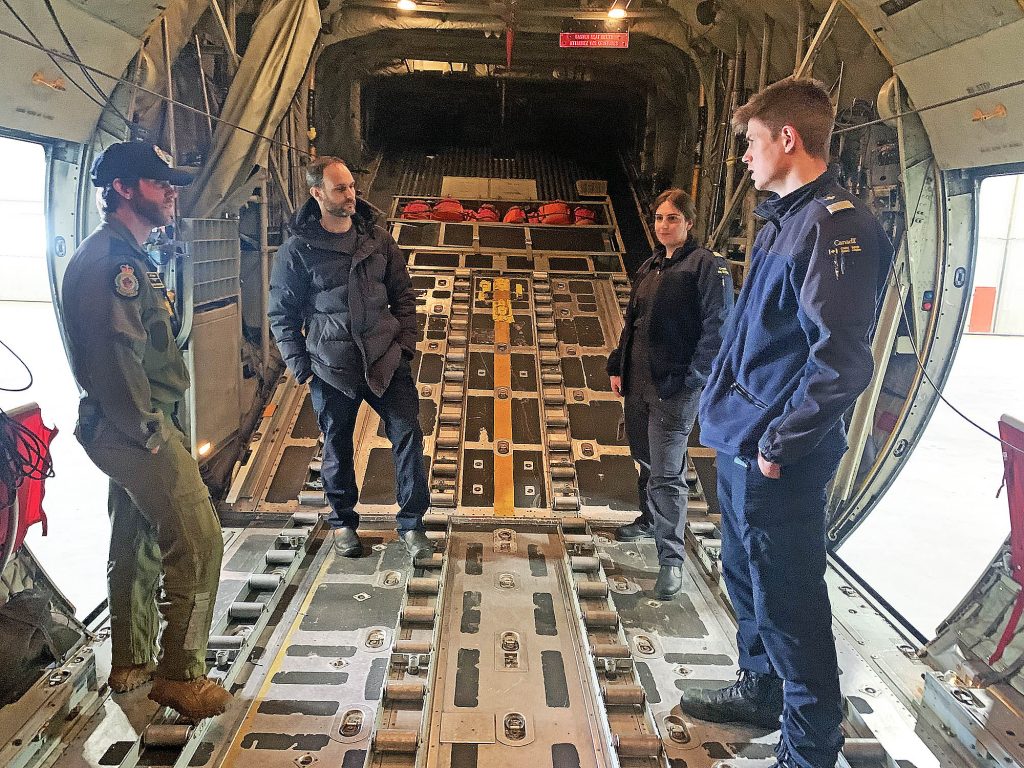
On board the 413 Squadron Hercules, loadmaster Master Corporal Shaun Robertson described the ways the aircraft can be configured to carry all the gear for a mission, what happens as spotters take their posts at the side windows, the tail ramp opens for gear drops or SAR-Tech jumps; how the Hercules operates during a search – and safety.
“Communication is super key – there is lots of kit here, multiple people and it can get pretty busy – but safety is #1. We’re always checking each other: we’re all a team, and we’re each working for the team.”
Routines are the same, whether it’s a training flight or an emergency call.
“We keep the knife sharp – people say it is monotonous, but monotony is key.”
Milhausen said the in-person opportunity to tour 413 Squadron’s facilities and aircraft, and meet the people on the other end of a radio or hoisting cable, makes a big difference.
“All the little details we pick up today – you can’t underestimate the connection between what we may be doing, and why 413 is doing something the way they are,” says Milhausen. “Whenever we can work out training opportunities or visits, it’s all a benefit.”